Can Foreigners Get a Mortgage in Türkiye? 2026 Guide
How Turkish banks lend to foreign buyers in 2026: residents vs non-residents, BDDK loan-to-value limits, lira loans, documents, ipotek and risks.
Many buyers ask whether foreigners can get a mortgage in Türkiye. The short answer is yes: Turkish banks do lend to foreign buyers, but on stricter terms than most people expect. The loan is usually in Turkish lira, the amount you can borrow is capped by national rules, and interest rates have been high. This guide explains how it works in 2026 and how to decide whether it makes sense for you.
Can Foreigners Get a Mortgage in Türkiye?
Nothing in Turkish law stops a bank from lending to a foreign national to buy a home. Several banks offer mortgage (housing loan, konut kredisi) products to foreigners, and some have dedicated products for buyers living abroad. What varies is appetite: each bank decides for itself whether to lend, to whom, for how long and at what rate.
In practice, three things shape your chances:
- Where you live and earn. A foreigner living and working in Türkiye with documented local income is the easiest case. A buyer living abroad with income only in another currency is harder, and fewer banks will consider it.
- The property. Banks lend only against a property with a clean title that can be valued and insured, and that foreigners are legally allowed to buy.
- The loan-to-value limits set by the banking regulator, BDDK, which apply to everyone.
Residents vs Non-Residents
Turkish currency rules (Decree No. 32 on the Protection of the Value of the Turkish Currency) draw a line between people resident in Türkiye and people resident abroad.
- Residents: individuals resident in Türkiye cannot borrow in foreign currency from Turkish banks, and loans indexed to a foreign currency cannot be given to residents. For a consumer living here, a housing loan is therefore in Turkish lira (TRY).
- Non-residents: the same Decree allows banks to extend both foreign-currency and lira loans to people resident abroad. In practice, whether a particular bank will offer you a foreign-currency mortgage is a commercial decision, and many only lend in lira. Ask each bank directly.
If you already hold a residence permit (ikamet izni) and live here, expect to be treated as a resident borrower. Our residence permit guide explains how property-based permits work.
How Much Can You Borrow? BDDK Loan-to-Value Limits
The Banking Regulation and Supervision Agency (BDDK) caps how much a bank may lend as a share of the property's value (the loan-to-value ratio, kredi değer oranı). The current table comes from BDDK Decision No. 11364 of 29 January 2026:
| Property value | Energy class A or B | Energy class C* | Other classes |
|---|---|---|---|
| Up to 5 million TL | 90% | 80% | 70% |
| 5–7 million TL | 80% | 70% | 60% |
| 7–10 million TL | 70% | 60% | 50% |
| 10–20 million TL | 50% | 40% | 30% |
| Over 20 million TL | 40% | 30% | 20% |
*Class C counts as "advantaged" only for buildings constructed after 2010, according to the announcement of the decision.
Points to note:
- Energy class matters. The class comes from the building's Energy Performance Certificate (Enerji Kimlik Belgesi). A newer, efficient building can qualify for a much higher loan than an older one at the same price.
- New and resale are treated the same. The 2026 decision removed the earlier distinction between first-hand and second-hand homes.
- Owning another home lowers the limit. If you, your spouse or your children under 18 already own at least one home, reduced ratios continue to apply. Ask the bank how it treats property you own outside Türkiye.
- Bank limits can be lower. These are maximums. Banks often set lower ratios and shorter terms for foreign borrowers, especially non-residents.
Because Antalya prices in popular areas are often above the lower bands, many foreign buyers find the realistic loan is a modest share of the price.
Loan Currency and Interest Rates
For residents, the loan is in lira and the monthly instalment is in lira. Mortgage rates in Türkiye are quoted as a monthly rate, which is easy to underestimate when you are used to annual rates.
Rates follow the Central Bank's policy rate. After the tightening cycle of 2023–2024, the Central Bank cut rates during 2025; in September 2026 it kept its policy rate at 37%, according to news reports of the decision. Lira mortgage rates are therefore still far higher than in the eurozone or the Gulf. They change often, so we do not quote figures here.
To compare offers properly:
- Ask each bank for the annual cost rate (yıllık maliyet oranı), which includes fees and insurance, not only the headline monthly rate.
- Compare the total amount repayable over the full term.
- Check the allocation fee, valuation fee and insurance costs.
- Ask about early repayment: in Türkiye the charge for paying off a housing loan early is capped by consumer law, but confirm the exact terms in your contract.
Documents Turkish Banks Ask For
Requirements differ by bank, but expect most of the following:
- Passport, and a residence permit if you live in Türkiye.
- Turkish tax number (vergi numarası), obtained free from a tax office.
- Proof of income: payslips and an employment letter, or tax returns and accounts if self-employed. Documents from abroad usually need an apostille (or consular legalisation), a sworn Turkish translation and notarisation.
- Bank statements showing income and savings.
- Credit history: a credit report from your home country; residents will also be checked through Türkiye's credit bureau (Kredi Kayıt Bürosu).
- Property documents: title deed copy, the purchase agreement, and the energy certificate.
Opening a Turkish bank account usually comes first; see our guide to opening a bank account and transferring money.
Valuation, DASK and Life Insurance
- Valuation: the bank orders an appraisal from a valuation company licensed by the Capital Markets Board (SPK). The loan is calculated on the appraised value, so a low valuation means a smaller loan. You usually pay the fee.
- DASK: compulsory earthquake insurance (DASK) is required for residential buildings, and a bank will not lend without it. It covers the building, not your contents.
- Life insurance: banks normally ask the borrower to have life insurance covering the loan, and often home insurance as well. You are generally entitled to use a policy from an insurer of your choice rather than the bank's own; ask for this in writing if the bank's quote is high.
The Mortgage Annotation (ipotek) on Your Title Deed
When the loan is paid out, a mortgage (ipotek) in the bank's favour is registered on the property at the Land Registry at the same time as the transfer to you. Your title deed (tapu) is in your name, but the mortgage shows on the register. You cannot sell the property free of the mortgage without the bank's release.
When you repay the loan in full, the bank applies to lift the mortgage (ipotek fekki or terkin). Most banks do this electronically with the Land Registry, so you often do not need to attend. Ask for confirmation, then check the register. Our guide to the Turkish title deed explains how annotations appear.
If you plan to use the purchase for citizenship, discuss any loan structure with your lawyer before signing, because the investment and annotation rules for citizenship are strict.
Alternatives to a Turkish Bank Mortgage
- Developer payment plans. For off-plan and newly completed projects, developers often offer instalment plans, sometimes without interest, over the construction period. Terms vary widely, and you must understand what happens to title if you miss a payment. Read our guide to buying off-plan in Antalya.
- Borrowing at home. Some buyers remortgage a property in their home country, or borrow against savings or investments, then pay cash in Türkiye. This keeps debt in the currency you earn in.
- Cash with a smaller purchase. A slightly cheaper property bought outright avoids interest, valuation and insurance costs.
The Main Risk: Currency Mismatch
If you earn in euros, dollars or dirhams and borrow in lira, each instalment depends on the exchange rate. Historically the lira has tended to weaken, which lowers the real cost of a lira loan for foreign earners, but high lira interest rates can offset that, and exchange rates can move either way. If you take a foreign-currency loan as a non-resident, the risk is different: your debt stays fixed in that currency while the property value in lira moves. Borrow only an amount you could still repay if rates or exchange rates moved against you.
Step by Step
- Decide the budget in your own currency, including buying costs.
- Get a tax number and open a Turkish bank account.
- Speak to two or three banks before choosing a property. Ask whether they lend to your profile (resident or non-resident), in which currency, maximum ratio, term, and the annual cost rate.
- Prepare documents with apostille, translation and notarisation where needed.
- Choose a property and check its title, energy class and legal status with your lawyer.
- Sign a purchase agreement that makes the loan approval clear, and agree what happens if the loan is declined.
- Valuation and approval. The bank values the property and issues a final offer.
- Insurance. Arrange DASK, life and home insurance.
- Completion. The transfer and the bank's mortgage are registered together at the Land Registry, and the bank pays the seller.
- Repayment and release. Pay the instalments; when the loan ends, confirm the mortgage has been lifted.
FAQ
Can a non-resident foreigner get a mortgage in Türkiye?
Some banks lend to non-residents, but fewer than lend to residents, and terms are usually tighter. Ask several banks early.
Can I borrow in euros or dollars?
Residents cannot: consumer loans are in lira. For non-residents, the rules allow foreign-currency loans, but many banks offer lira only.
What is the maximum loan-to-value?
Under the January 2026 BDDK decision, the maximum ranges from 90% to 20% depending on value, energy class and whether you already own a home. Banks may set lower limits.
Is DASK required?
Yes. Compulsory earthquake insurance is needed for residential buildings, and banks require it before lending.
How long does approval take?
It depends on the bank and how complete your documents are. Allow several weeks, particularly if documents come from abroad.
Rules and fees in Türkiye change from time to time. This article reflects the situation as of September 2026 and is general information, not legal or tax advice. Confirm the details for your own case with a licensed lawyer or accountant.
Thinking about financing a purchase in Antalya? Get in touch to talk through your options.
New-build projects for sale in Antalya
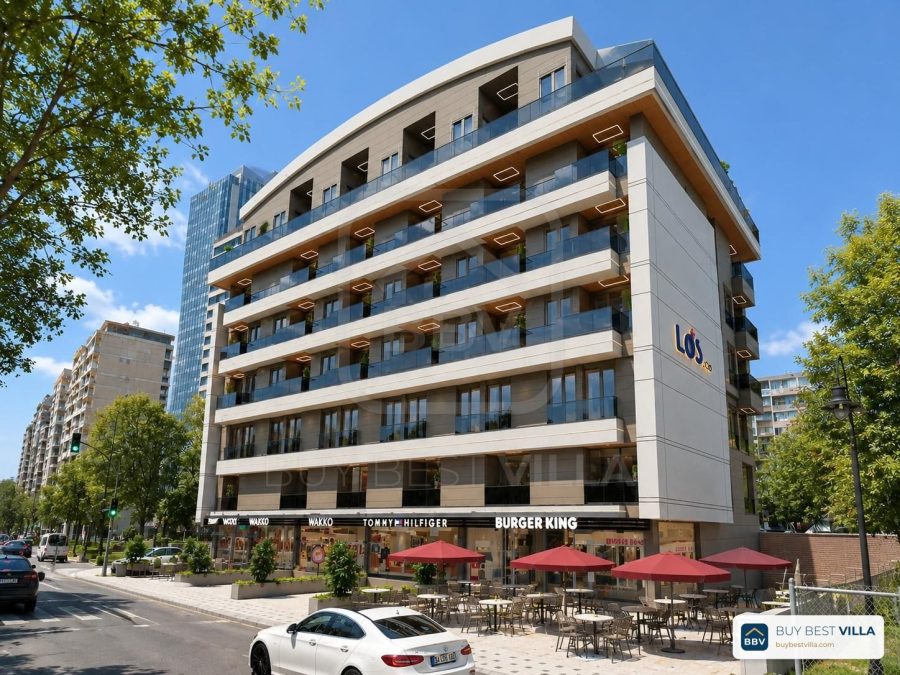
Los Tigres
A boutique development in Sarısu, Konyaaltı, with a pool and covered parking: 1+1 units usable as home or office, plus ground-floor and rooftop duplexes. Delivery August 2027.
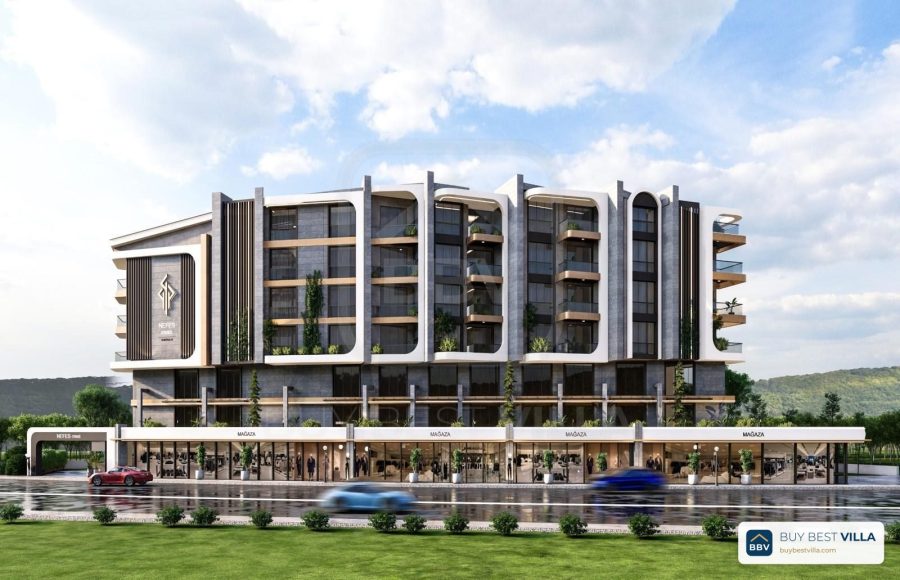
Nefes Corner
A boutique corner-plot project with a pool garden and 44 units: ground + mezzanine duplexes, 1+1 and 2+1 flats and roof duplexes.
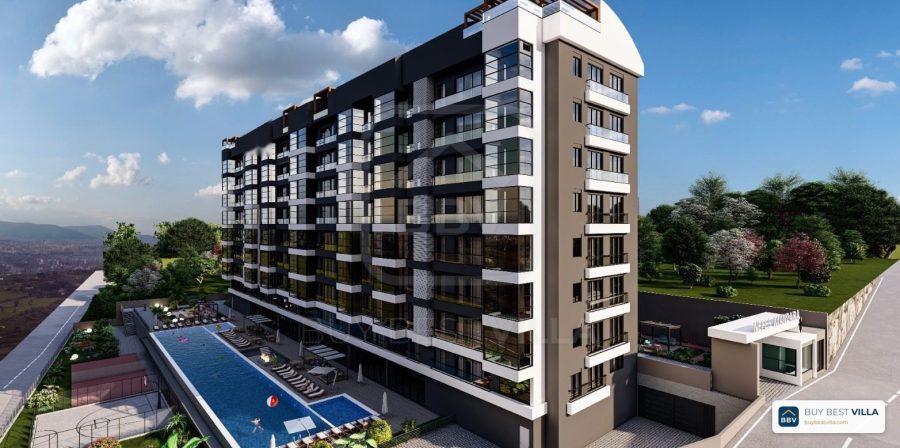
Nefes Premium
A three-block, 56-unit residence in Kepez with a 350 m² pool, tennis court, jogging track, garden duplexes and penthouse duplexes with private pools. From 2+1 to 4+1.