Perge and Aspendos: Weekend Trips for New Antalya Residents
Perge and Aspendos, the great cities of ancient Pamphylia: how to get there, what to see and when the Aspendos festival is held.
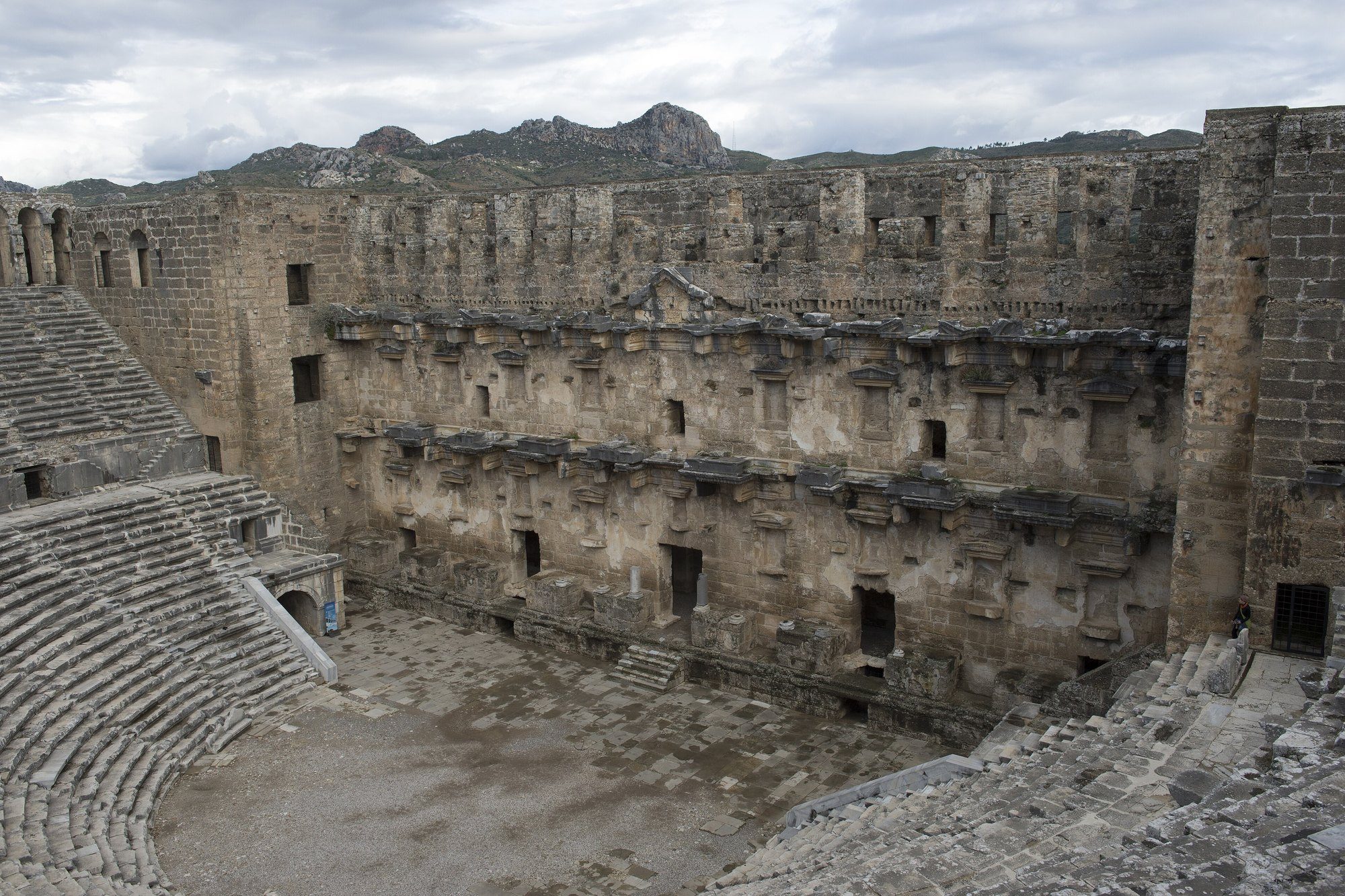
Perge and Aspendos are the two most important cities of ancient Pamphylia, and both make an easy half-day trip for anyone living in Antalya. Perge lies about 15–20 km east of the centre in Aksu and can even be reached by tram; Aspendos, about 45 km east near Serik, is home to one of the best-preserved theatres of the ancient world. If you have just moved to Antalya, there are few better ways to understand the region's history than starting with these two cities.
At a glance
- Pamphylia: the ancient plain between the Taurus Mountains and the sea, stretching from today's Antalya towards Alanya.
- Perge: in Aksu; known for its Hellenistic gate, colonnaded street and stadium. Take the tram to the Aksu stop and walk or take a taxi from there.
- Aspendos: in Serik, near the Köprüçay river (the ancient Eurymedon); famous for its 2nd-century AD theatre and aqueduct.
- Festival: the 33rd International Aspendos Opera and Ballet Festival took place from 12 to 26 September 2026.
- Best time: spring and autumn; in summer, early morning or late afternoon.
What was Pamphylia?
In antiquity, Pamphylia was the name of the fertile coastal plain running from the Gulf of Antalya in the west to around today's Alanya in the east, bounded to the north by the Taurus Mountains. Perge, Sillyon, Aspendos and Side were its great cities. Attaleia, the forerunner of today's Antalya, came much later: it is a port city generally believed to have been founded in the 2nd century BC by King Attalus II of Pergamon.
Living in Antalya therefore means, in a sense, living in the middle of this ancient region. As you drive east along the D400 highway, you pass cities that were built on the same plain two thousand years ago.
Perge: Pamphylia's grand city
Perge was one of the region's richest cities in the Hellenistic and Roman periods, and in the late Roman era it became the capital of the province of Pamphylia. Its most famous son is the mathematician Apollonius, known for his work on conic sections; he is credited with giving the ellipse, the parabola and the hyperbola their names. According to the Book of Acts in the Bible, St Paul also passed through Perge on his missionary journey.
Systematic excavations began in 1946 under Professor Arif Müfid Mansel and continue today.
What is there to see at Perge?
- The Hellenistic Gate: with its two round towers, the city's symbol. In the early 2nd century AD it was transformed into a monumental entrance with the support of Plancia Magna, the city's great female benefactor.
- The colonnaded street: the main street, with a water channel flowing down its centre through a series of stepped pools, is an impressive example of Roman town planning.
- The stadium: thought to have held about 12,000 spectators, it is one of the best-preserved ancient stadiums in Anatolia.
- The baths and agora: the areas that best show the city's daily life.
- The theatre: because of restoration work, some sections may be closed at times; check the current situation before you go.
Many of the statues found at Perge are in the collection of the Antalya Museum; however, the museum building was demolished in 2025 to be rebuilt, and the museum is currently closed to visitors.
How do you get to Perge?
By car it takes about half an hour from the centre. If you prefer public transport, take the tram to the Aksu stop and then walk for about half an hour or take a short taxi ride. The site is large and has little shade, so allow at least two to three hours.
Aspendos: one of the best-preserved theatres of antiquity
Aspendos was built on a hill close to the Köprüçay river, known in antiquity as the Eurymedon. The Battle of the Eurymedon, in which the Athenian commander Cimon defeated the Persian fleet in the 5th century BC, was fought at the mouth of this river. Alexander the Great also came to Aspendos when he passed through Pamphylia in 333 BC.
The theatre
What makes Aspendos world-famous is its theatre, built in the mid-2nd century AD by the architect Zenon. With its stage building still standing almost complete, it is cited as one of the best-preserved theatres of the ancient world. One reason it survived so well is that it was never abandoned: in the 13th century the Seljuks used the theatre as a caravanserai and turned the stage building into a palace. Its acoustics are still impressive today; words spoken on the stage can be heard clearly from the upper rows.
The aqueduct and the Eurymedon Bridge
On the plain north of the theatre stretch the remains of the Roman aqueduct that carried water to the city. Its tall pressure towers, part of an inverted siphon system, are among the most fascinating examples of ancient engineering. On the nearby Köprüçay stands the Eurymedon Bridge, known for its zigzag shape, built in the 13th century under the Seljuk Sultan Alaeddin Keykubad I on the foundations of a Roman bridge.
When is the Aspendos Opera and Ballet Festival?
Organised by the State Opera and Ballet, part of Türkiye's Ministry of Culture and Tourism, the International Aspendos Opera and Ballet Festival is one of the highlights of Antalya's cultural calendar. The 33rd festival took place from 12 to 26 September 2026; the programme included Verdi's opera Attila, the ballet Anna Karenina, Carl Orff's Carmina Burana and Spartacus, performed by the visiting Abay National Opera and Ballet Theatre from Kazakhstan.
The dates and programme of the next festival are announced by the State Opera and Ballet. A few tips for a performance night:
- Set off early: the road to Aspendos can be busy on festival evenings.
- Bring a cushion: sitting on ancient stone steps for hours is tiring.
- Buy tickets through official channels: popular performances sell out fast.
Sample weekend routes
Half a day: Perge only
Take the tram to Aksu early in the morning, explore Perge in the cooler hours and head back to the city for lunch. For newcomers without a car, this is the easiest start.
A full day: Perge and Aspendos
Visit Perge in the morning, have lunch on the way to Aspendos and see the theatre and the aqueduct in the afternoon. On the way back, you can stop at the Eurymedon Bridge.
A long day: a Pamphylia tour
Add Side to Perge and Aspendos and end the day at the ancient city by the sea. If you prefer nature, you can continue north from Aspendos towards Köprülü Canyon.
For nature and history west of the city, see our guide to Termessos, Güver Cliff and Düzlerçamı; for stops closer to the centre, read places to visit near Antalya city centre.
Practical tips
- Tickets and hours: check current prices and seasonal opening hours on the Ministry of Culture and Tourism's museum website. Turkish citizens can enter with the MüzeKart.
- Heat: avoid visiting at midday in July and August; a hat, sunscreen and plenty of water are essential.
- Shoes: ancient stone surfaces are uneven and slippery, so wear comfortable, sturdy shoes.
- Time: allow at least two to three hours for Perge and one and a half to two hours for Aspendos.
If you are thinking of settling in Antalya, you can browse the current projects for sale on our projects page.
Frequently asked questions
Can you get to Perge by public transport?
Yes. Take the tram to the Aksu stop, then walk for about half an hour or take a short taxi ride to Perge. In summer, go early in the morning for the walking part.
When was the theatre of Aspendos built?
The theatre was built in the mid-2nd century AD, in the Roman period, by the architect Zenon. Used as a caravanserai by the Seljuks in the 13th century, it is one of the best-preserved theatres of the ancient world.
When is the Aspendos Opera and Ballet Festival held?
The festival is organised by the State Opera and Ballet; the 33rd edition took place from 12 to 26 September 2026. The dates and programme of each new festival are announced separately every year.
Can you visit Perge and Aspendos on the same day?
Yes, easily by car. Plan Perge in the morning and Aspendos in the afternoon, and use the hottest part of a summer day for lunch.
Is it suitable for children?
Yes, but with little shade and uneven ground, a shorter programme works better. For most children, seeing the theatre at Aspendos is easier and more impressive than walking around Perge's large site.
Cover photo: Dosseman, CC BY-SA 4.0, Wikimedia Commons (cropped).
New-build projects for sale in Antalya
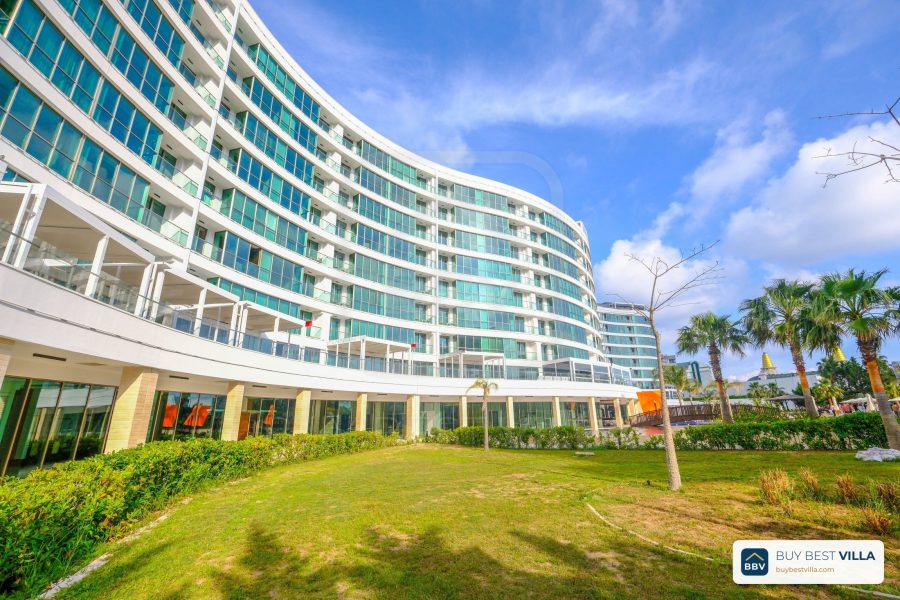
Sirius Town
Hotel-concept residence in Kundu, 500 m from the sea and 12 km from the airport: indoor and outdoor pools, aquapark, spa and lobby services; 1+1, 2+1 and roof duplex options.
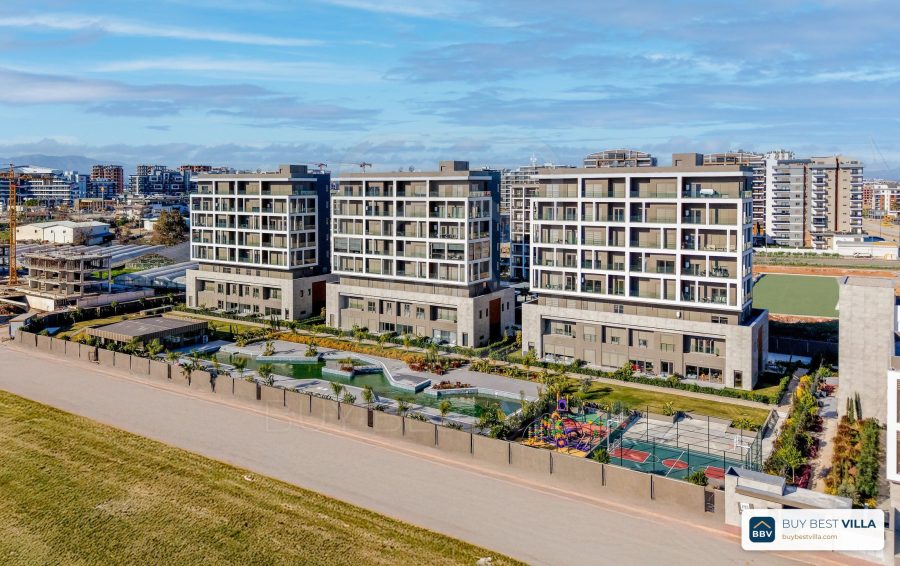
Sirius Modern
A 3-block, 96-home complex in Altıntaş: 500 m² swimming pool, fitness, sauna, basketball court; 1+1, 2+1 and 3+1 garden duplex options.
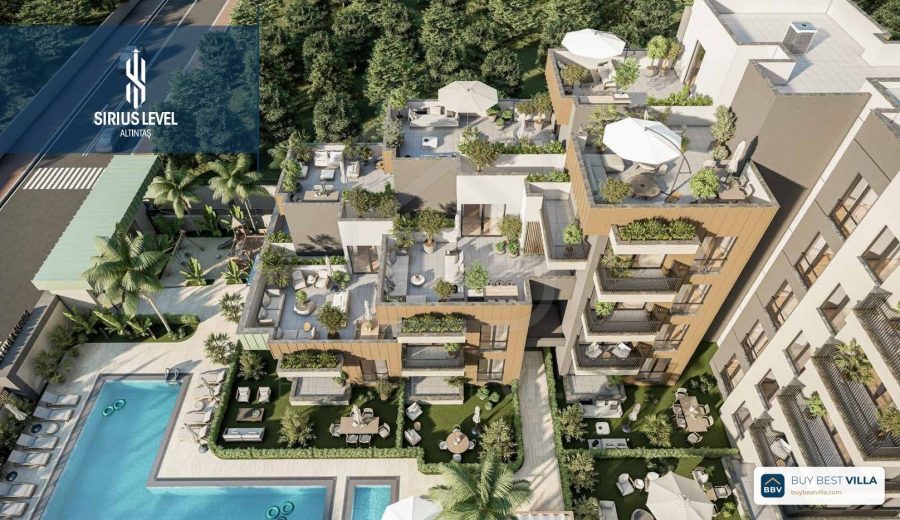
Sirius Level
A boutique residence in Altıntaş with stepped terrace architecture: 1+1 and 2+1 apartments with large terraces, swimming pool, fitness, sauna and indoor parking.