Termessos, Güver Cliff and Düzlerçamı: A Nature Guide Near Antalya
Termessos, Güver Cliff and the Düzlerçamı forest: how to get there, what to see and the best seasons to visit.
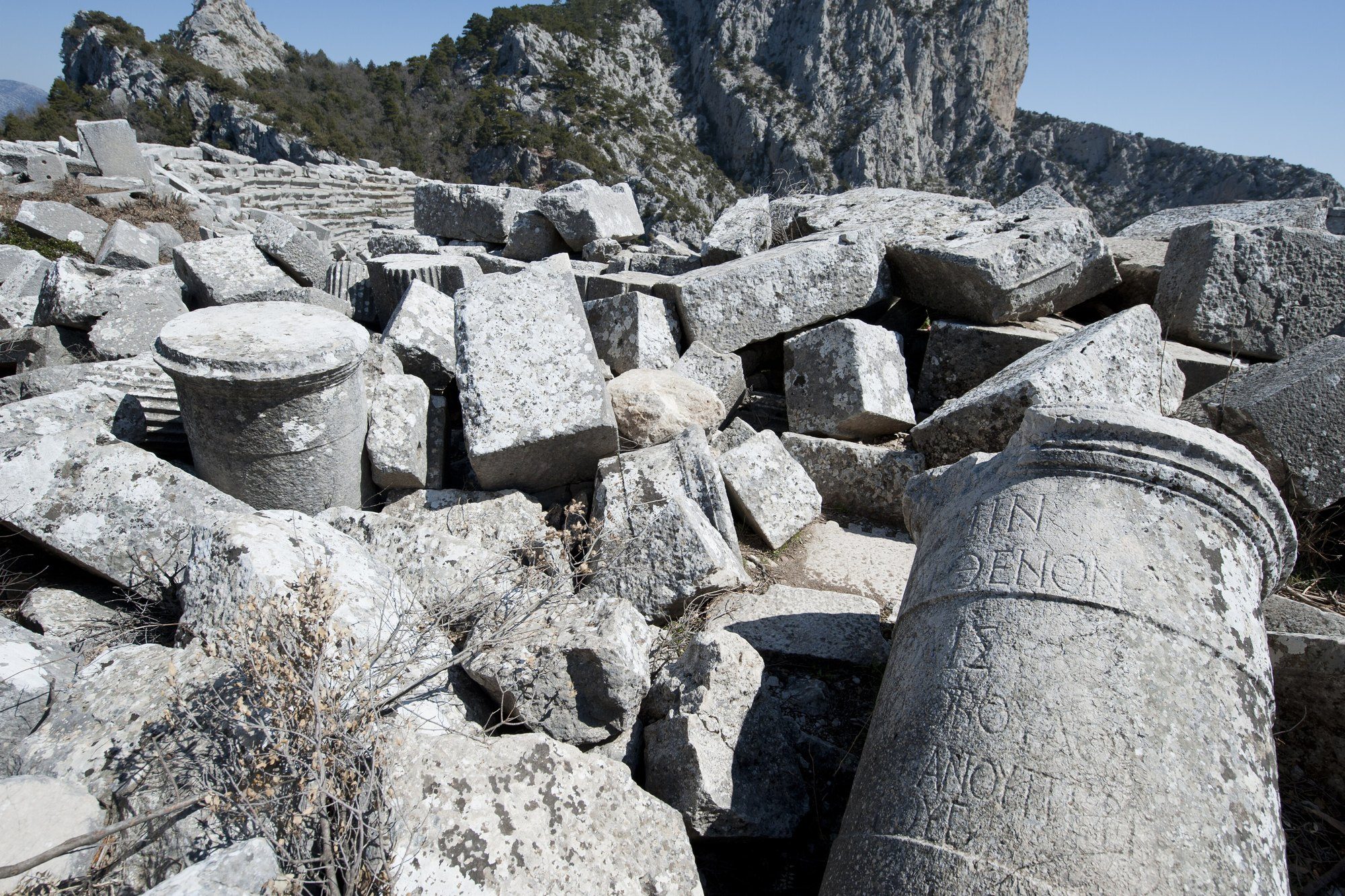
Termessos, Güver Cliff and the Düzlerçamı forest are three nature and history stops sitting side by side in the hills north-west of Antalya, between Döşemealtı and the road to Korkuteli. All three are roughly half an hour to an hour's drive from the city centre, and spring and autumn are the most comfortable times to go. This guide covers what to see, how to get there and which season suits which plan.
At a glance
- Termessos: an ancient city built at over 1,000 metres on the slopes of Mount Güllük, famous as the city Alexander the Great besieged but could not take in 333 BC.
- Mount Güllük-Termessos National Park: established in 1970, covering around 6,700 hectares.
- Güver Cliff: a canyon about 2 km long and more than 100 metres deep, around the 15th kilometre of the Antalya–Korkuteli road.
- Düzlerçamı: a red-pine forest protected as a wildlife development area, known for its fallow deer.
- Best time: April to early June, and late September to November.
Why is Termessos called an "eagle's nest"?
Termessos was a mountain city founded by the Solymi, one of Anatolia's native peoples, who appear in Homer's Iliad alongside the legend of Bellerophon. They built it on the south-western slope of Mount Güllük (ancient Solymos), above a narrow, steep valley. The position was so well defended that when Alexander the Great passed through Pamphylia in 333 BC, he besieged the city and then withdrew without taking it. According to ancient writers, he likened it to an eagle's nest.
Under Rome, Termessos was granted autonomous status by the Roman Senate in 71 BC and minted its own coins for a long time. The end probably came when an earthquake destroyed its aqueduct, and the city was abandoned around the 5th century.
What is there to see at Termessos?
- The theatre: thought to have seated around 4,000–5,000 people, it sits on the edge of the cliff overlooking the Pamphylian plain and, on clear days, the sea. It is the most photographed spot on the site.
- The agora and cisterns: large rock-cut cisterns show how the city solved its water problem.
- The odeon and temples: the odeon, whose walls still stand tall, is one of the best-preserved examples of Hellenistic architecture here.
- The necropolis: in the upper part of the city, hundreds of sarcophagi lie scattered across the mountainside, many with lids toppled by earthquakes and time, giving the area an almost surreal look.
- The King's Road and Hadrian's gate: at the start of the ancient road climbing up from the car park are the remains of a gate built in honour of Emperor Hadrian.
Practical tips for your visit
There is a vehicle fee at the national park entrance and a separate ticket for the archaeological site. It is best to check current prices and opening hours on the Ministry of Culture and Tourism's museum website before you go. The path from the car park to the theatre is rocky and steep and can take half an hour at a relaxed pace. Sturdy shoes, a hat and plenty of water are essential: there is little shade, and the stone ground gets very hot at midday in summer.
Hiking in Mount Güllük-Termessos National Park
Termessos lies inside Mount Güllük-Termessos National Park, established in 1970. The park rises from about 250 metres to 1,665 metres and combines red-pine forest, maquis scrub and rocky peaks. Wild goats, fallow deer, caracals and several birds of prey are among the species that live here.
The most rewarding walk is within the ancient city itself: the route from the theatre to the necropolis offers half a day of history and views on its own. The park's picnic areas are also a familiar weekend escape for local families. Remember that camping and picnic rules are set by the park management, and lighting fires is strictly restricted, especially in summer.
Where is Güver Cliff and how do you see it?
Güver Cliff (Güver Canyon) lies in the Düzlerçamı forest, right by the road, around the 15th kilometre of the Antalya–Korkuteli road. Carved by surface water wearing through layers of limestone over a very long geological period, the canyon is about 2 km long and more than 100 metres deep.
What sets Güver apart is that you do not walk through it; you look down into it. Viewing terraces and railed lookout points along the edge frame the sheer canyon walls, the Taurus Mountains behind and, on clear days, the Gulf of Antalya in a single shot. Towards sunset the rock walls turn orange, which is the best time for photographs.
A short note: in recent years, local news has reported visitors tying cloth and plastic bags to the trees along the cliff edge. To protect the site, tie nothing, take your rubbish home and stay inside the railings.
The Düzlerçamı forest and its fallow deer
Düzlerçamı is a large red-pine forest within Döşemealtı, about 20 km from Antalya, protected as a wildlife development area. It is one of the most important places in Türkiye where the endangered fallow deer lives in its natural habitat, and a dedicated protection and breeding station for the deer is located here.
Its forest roads are among the closest options to the city for hiking and mountain biking. Go on a weekday morning and you will notice the quiet of the forest and the birdsong far more.
One more stop nearby: Karain Cave
Karain Cave, near Yağca in Döşemealtı, is one of Türkiye's most important Palaeolithic sites. Even if you do not fit it into the same day as Termessos and Güver, it makes a good separate half-day trip for anyone exploring the area.
Which season is best?
- Spring (April to early June): wild flowers, green slopes and mild weather. The best time for walking.
- Summer (July–August): the altitude makes it a little cooler than the coast, but midday is still hot. Go early in the morning or late in the afternoon.
- Autumn (late September to November): clear air, long views and fewer people. Ideal for photography.
- Winter: rainy days can make the paths slippery, and the higher parts feel cold. On a clear day it is still beautiful.
For more on the seasons, see our guide to Antalya's weather through the year.
Living next to nature
One of the appeals of this area is how short the distance is between the city and the wild. Döşemealtı, a short drive from the centre, is the district chosen by people who want a garden and a quieter pace; we cover it in detail in our guide to villa life in Döşemealtı.
In Düzlerçamı, next to Güver Cliff and Termessos National Park, Terra Doğa is a concrete example of that lifestyle: a community of 42 two-storey 5+1 villas, each with its own pool. It is worth noting if you would like your weekend hike to start at your front door.
Frequently asked questions
Can you reach Termessos by public transport?
There is no regular public transport to the entrance of the ancient city. Buses towards Korkuteli can drop you at the national park turn-off, but from the gate to the site it is a long uphill road. Your own car, a hire car or a taxi is the most practical option.
How long does a visit to Termessos take?
Two to three hours is enough for a relaxed visit covering the theatre, the agora and the necropolis. The ground is uneven, so take your time; in summer, choose the early morning.
Is there an entrance fee for Güver Cliff?
The viewing terraces at Güver Cliff are an open natural area and can generally be visited freely. However, rules for protected areas can change, so check the current situation before you go.
Can you see Termessos, Güver and Düzlerçamı in one day?
Yes. Head up to Termessos early in the morning, take a break in the Düzlerçamı forest in the afternoon and finish the day with the sunset at Güver Cliff: a full but not exhausting day trip from the centre.
Is the area suitable for children?
The picnic areas at Düzlerçamı and the railed terraces at Güver are easy to visit with children. The paths at Termessos are steep and rocky, so they need care with little ones; a baby carrier is a better choice than a pushchair.
Cover photo: Dosseman, CC BY-SA 4.0, Wikimedia Commons (cropped).
New-build projects for sale in Antalya
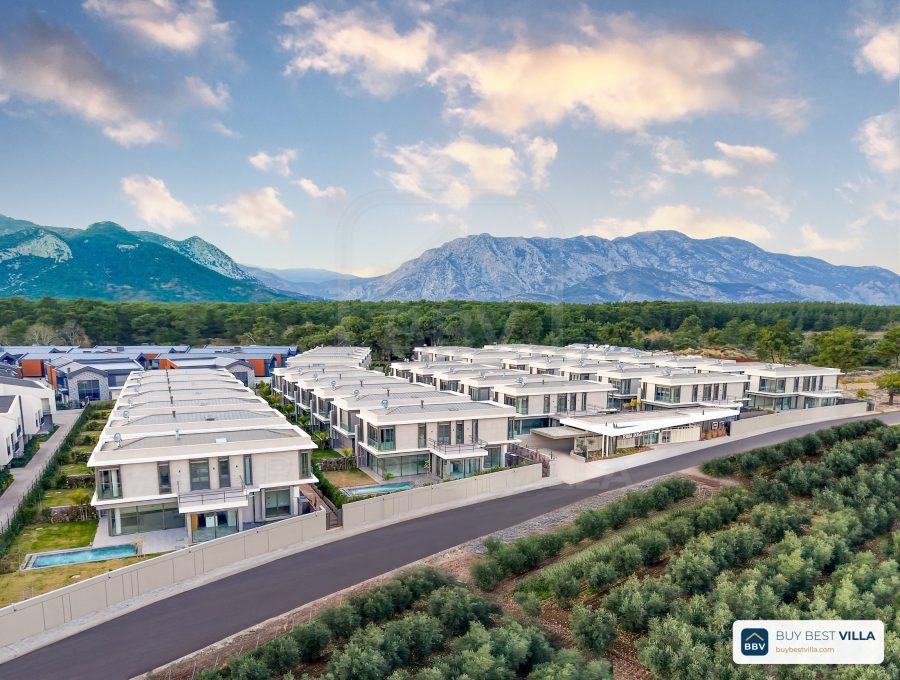
Terra Doğa
A 42-villa community in Düzlerçamı next to Termessos National Park: two-storey 5+1 villas with private pools, shared pool, tennis court, spa and hamam.
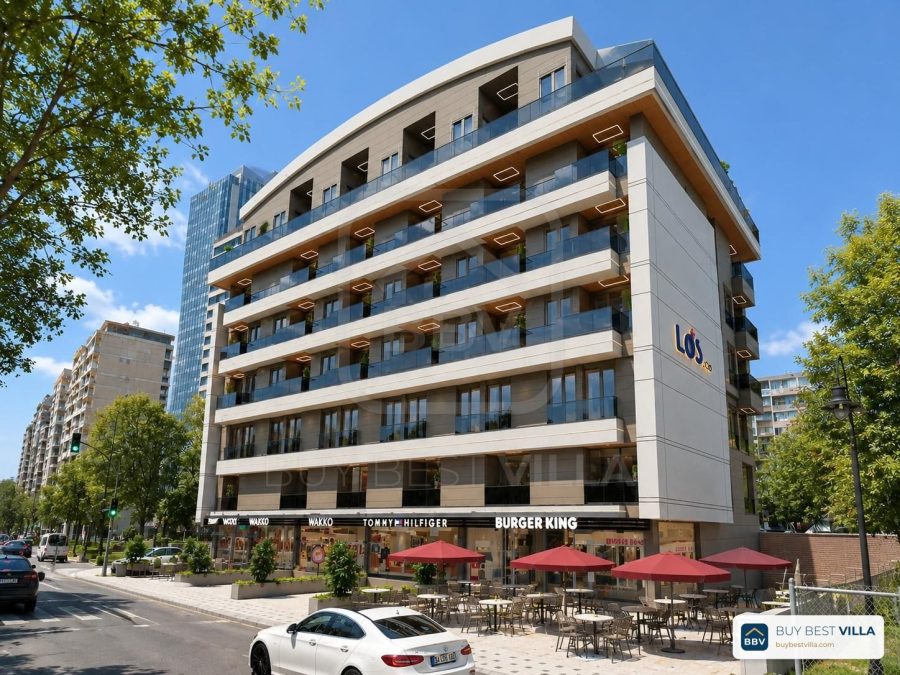
Los Tigres
A boutique development in Sarısu, Konyaaltı, with a pool and covered parking: 1+1 units usable as home or office, plus ground-floor and rooftop duplexes. Delivery August 2027.
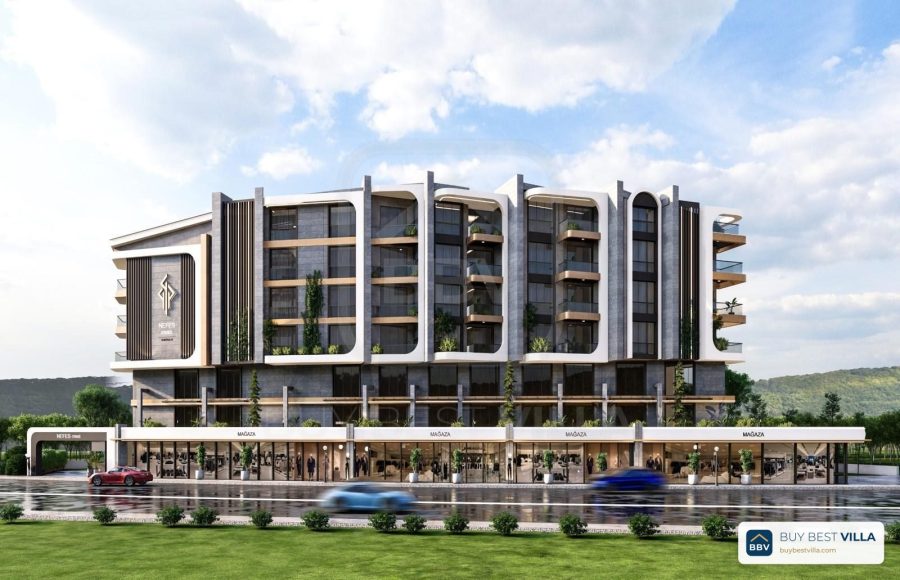
Nefes Corner
A boutique corner-plot project with a pool garden and 44 units: ground + mezzanine duplexes, 1+1 and 2+1 flats and roof duplexes.