Cost of Living in Antalya: Which Categories Shape Your Budget?
The cost of living in Antalya is not a single number. Using TurkStat data, we walk through housing, transport, bills and food, and show how to build your own budget.
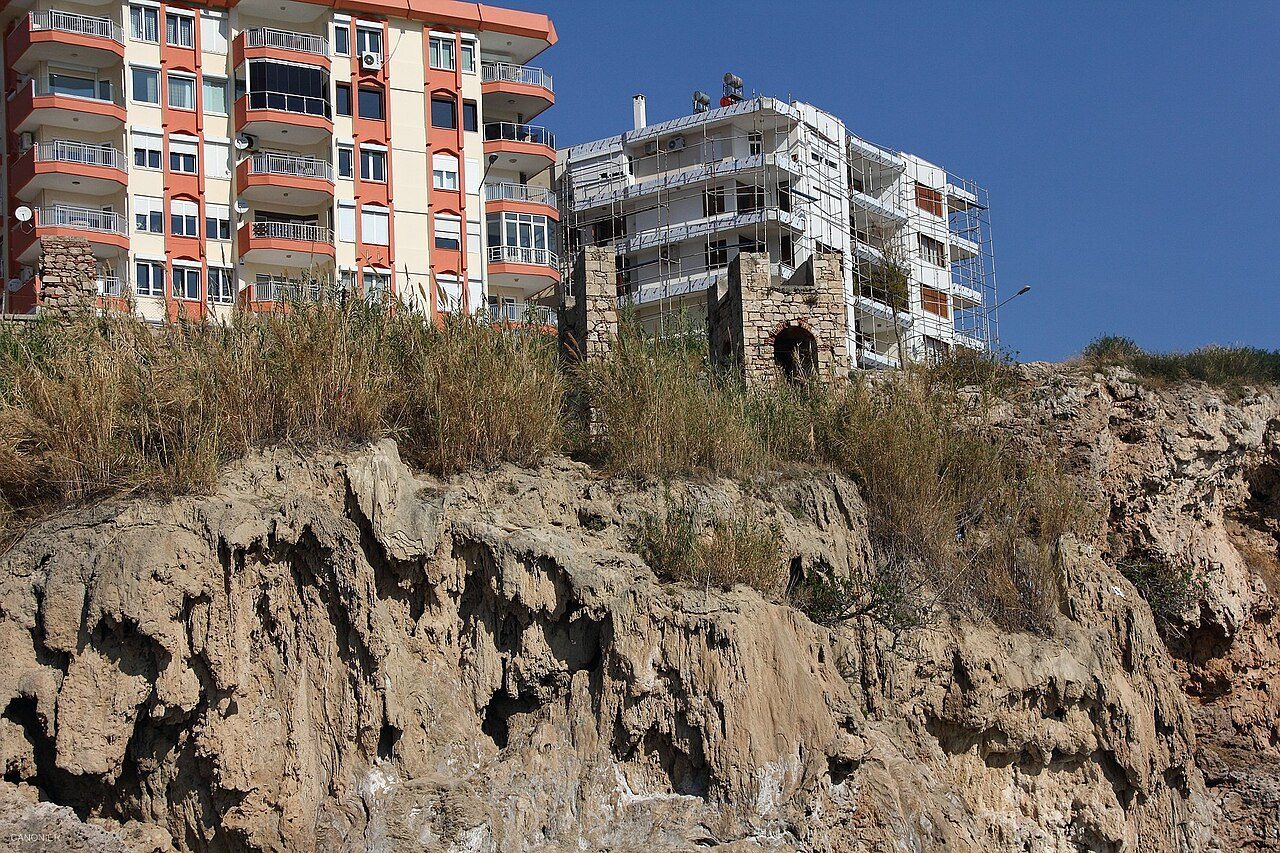
There is no single answer to "how much does it cost to live in Antalya?" The figure depends on the district, the size of your household, whether you drive, and even the month of the year. Prices also move quickly, so any number printed today can be out of date within a few months. Instead of quoting a fixed amount, this guide explains which cost categories actually shape a budget and how to work them out for yourself.
What the official data says
According to the 2025 Household Consumption Expenditure results that TurkStat (TÜİK) published on 2 June 2026, the largest share of household spending across Türkiye goes to housing and rent: 29.3 percent. Transport follows at 20.5 percent and food and non-alcoholic beverages at 17.3 percent. The housing and rent share was 26.0 percent the year before, a rise of 3.3 points. The smallest shares are insurance and financial services (0.8 percent), education (1.8 percent) and health (2.2 percent).
These are national averages, not Antalya-specific figures, but they are a useful reference point. The same release shows that for single-person households the housing and rent share rises to 41 percent, while in households of six or more people food rises to 23.7 percent. So the "cost of living" story differs by household type. For current, province-level price information, the most reliable route is TurkStat's consumer price announcements and data portal.
Category 1: Housing (renting or owning)
Housing is the first and largest line for almost every household. If you rent, it is the monthly rent; if you own, it is the loan instalment or the opportunity cost of the capital you tied up. Location matters: the gap between seafront or central areas and the outer neighbourhoods is often large. We compared districts in our article on choosing a district by budget and lifestyle (in Turkish).
If you are thinking of buying, look beyond the purchase price to the yearly cost of ownership. Our guide to the real costs of owning a home in Antalya each year lists them one by one.
Category 2: Service charges, taxes and fixed bills
In a residential complex, the monthly service charge (aidat) is a fixed cost that people often overlook. A complex with a pool, security, lifts and landscaping will differ noticeably from a simple apartment block. For how it works, see aidat explained.
Owners also pay annual property tax; the schedule is covered in our (Turkish) guide to when and in how many instalments property tax is paid. Compulsory insurance such as DASK belongs in this category as well.
Category 3: Transport
Transport is the second-largest category in TurkStat's data, and it is higher for car-owning households. In central Antalya it is possible to live without a car using the tram, buses and the AntalyaKart; see living in central Antalya without a car. In outer districts a car is close to essential, so add fuel, insurance, inspection and maintenance to the budget.
Category 4: Utility bills and the climate
Utility bills in Antalya follow the seasons. According to the Turkish State Meteorological Service (MGM), averages for 1930-2025 show a July mean temperature of 28.6 °C and a mean daily maximum of 34.2 °C, so air conditioning will lift summer electricity bills. Winters are mild (January mean 10.1 °C) but wet and humid, and heating needs are far lower than in northern cities. The orientation, insulation and glazing of your flat directly affect your bills. For choosing a cooler home, see our Turkish guide to summer heat, air conditioning and cooler homes.
Collecting your electricity, water, gas (where available), internet and phone bills for the last twelve months gives a far better estimate than guessing.
Category 5: Food and daily life
Local produce is an advantage. Seasonal fruit and vegetables are usually cheaper at neighbourhood markets. In the same TurkStat survey, fresh fruit and vegetables are the most wasted food group (39.7 percent), so planning your weekly shop shows up directly in the budget. Eating out, cafés and entertainment are flexible lines that depend entirely on your own habits.
Category 6: Health, education and the unexpected
Health and education shares look small in the national average but depend on your family. If you use private schools, private health insurance or regular medication, list them as separate lines. A reserve for emergencies keeps the budget healthy.
How to build your own budget
- Write down your monthly net income.
- List fixed costs: rent or instalment, service charge, subscriptions, insurance.
- Estimate variable costs (food, transport, bills) from the average of the last 3-6 months; calculate summer and winter bills separately.
- Divide yearly costs (tax, insurance, maintenance) by 12 and add them to the monthly budget.
- Set aside part of your income for the unexpected.
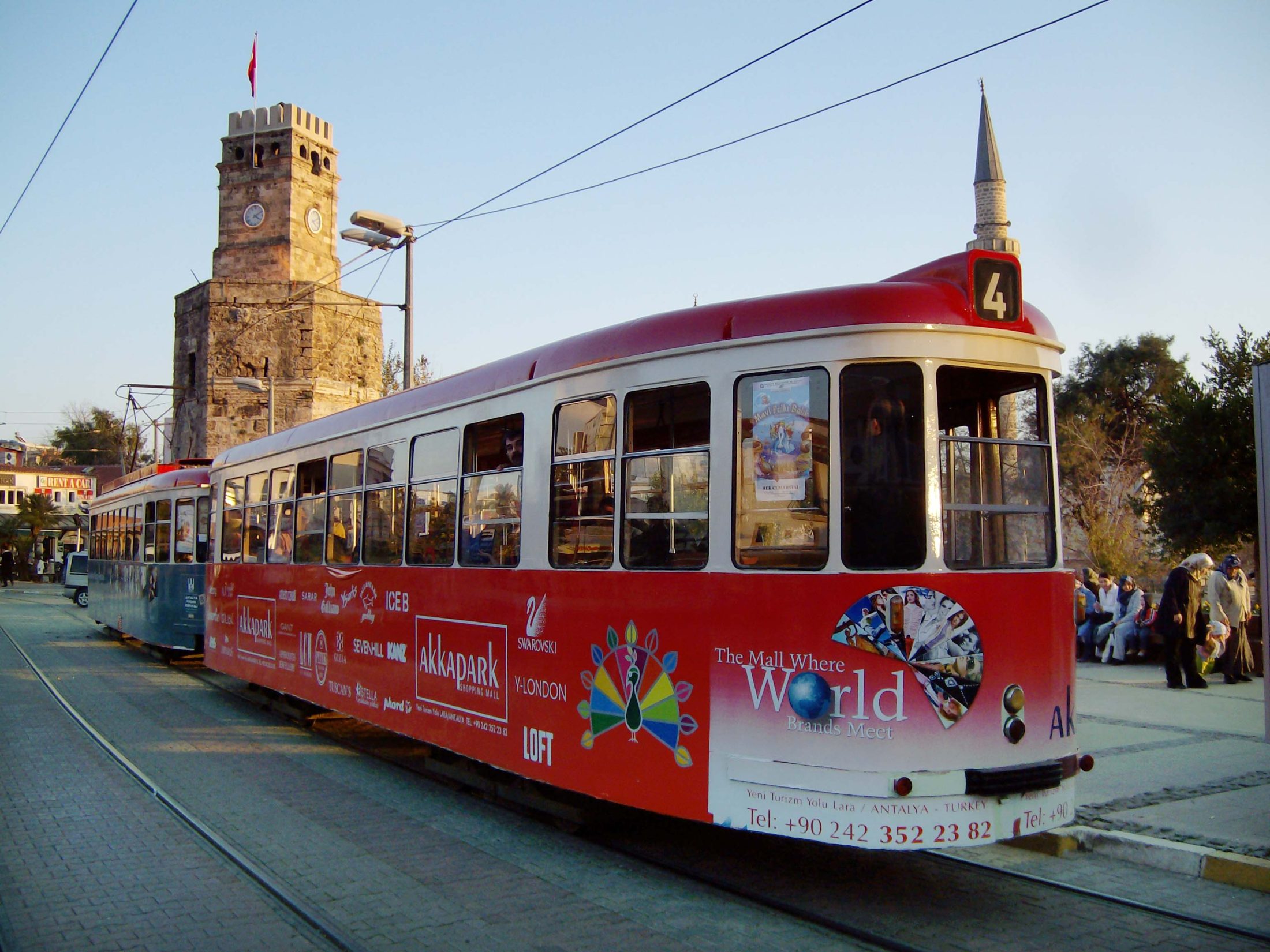
Photo: Marcel Heinrichs at de.wikipedia / Public domain — Wikimedia Commons
Conclusion
The cost of living in Antalya is an equation that changes with district, household and lifestyle. TurkStat's data clearly shows housing is the largest line; the rest is shaped by how you travel and by seasonal bills. Check official sources for current prices and base your own calculation on real bills. Before moving, our moving checklist (in Turkish) may help, and if you are considering a purchase, see buying a home in Antalya. Feel free to write to us with any questions.
This content is for general information only and is not legal or financial advice. Please consult a professional before making a decision.
Cover photo: CANONIER / CC BY-SA 3.0 — Wikimedia Commons
New-build projects for sale in Antalya
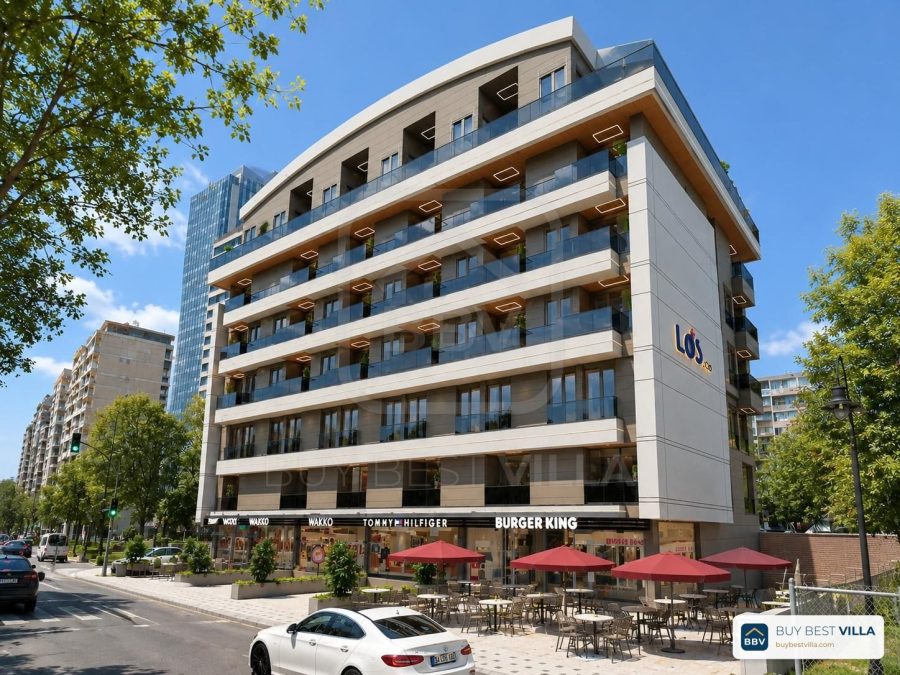
Los Tigres
A boutique development in Sarısu, Konyaaltı, with a pool and covered parking: 1+1 units usable as home or office, plus ground-floor and rooftop duplexes. Delivery August 2027.
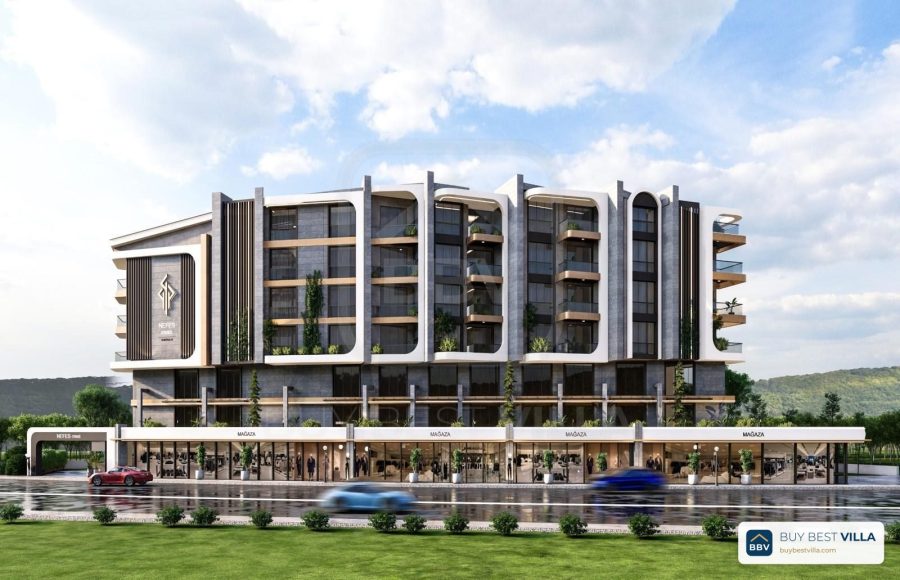
Nefes Corner
A boutique corner-plot project with a pool garden and 44 units: ground + mezzanine duplexes, 1+1 and 2+1 flats and roof duplexes.
Nefes Premium
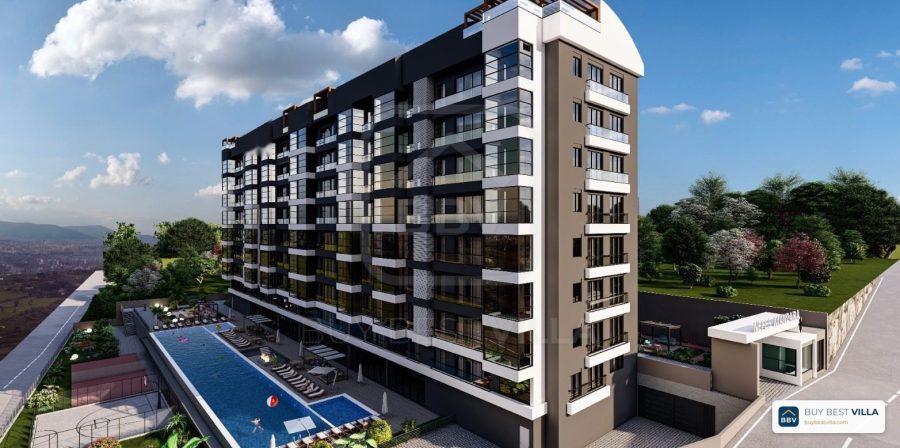
A three-block, 56-unit residence in Kepez with a 350 m² pool, tennis court, jogging track, garden duplexes and penthouse duplexes with private pools. From 2+1 to 4+1.