COP31 and the Green Transition: Why Are Energy-Efficient Homes Gaining in Value?
Turkey has enshrined its 2053 net-zero target in law, and buildings are at the heart of this transition. The Energy Performance Certificate, the Climate Act and the 10-point green checklist to follow before purchasing are covered in this article.
COP31 is not merely a diplomatic conference; the impact of climate policies on the housing market is also accelerating. Turkey has enshrined its 2053 net-zero emissions target in law, and buildings are at the heart of this transition. In this article, we explain which regulations are currently in force, what this means for property investment, and what you should look out for before buying. For the summit itself, take a look at our COP31 Antalya Guide.
Updated: 26 October 2026
Why are buildings at the heart of the climate agenda?
According to data shared by Assoc. Prof. Dr Izzet Arı, buildings account for approximately one-third of final energy demand in Turkey; around 9.5 million buildings consumed 38.3 million tonnes of oil equivalent in energy in 2021. Consequently, achieving the net-zero target without improving the building stock does not appear feasible, and regulations are focusing precisely on this area.
Legislation: what is currently in force, and what is on the way?
- Energy Performance Certificate (EPC). An EPC must be issued for the purchase, sale and letting of a building or independent unit; the certificate details insulation, heating and cooling systems, and the energy consumption class. What this means for investors: If the certificate is missing, additional declarations may be required during land registry transactions; a property with a valid certificate provides reassurance to both the buyer and the tenant. For further details, see our article What is an Energy Performance Certificate?.
- Minimum class for new buildings. New buildings must have an energy performance class and a greenhouse gas emissions class of at least C. What this means for investors: Minimum efficiency standards are no longer a feature but a requirement in new projects.
- Regulations coming into force on 1 January 2027. The Ministry of Environment, Urbanisation and Climate Change has made the Energy Performance Certificate (EKB) and life-cycle analysis certificate mandatory for new buildings exceeding 10,000 square metres from 1 January 2027. What this means for investors: Transparency will increase in large-scale projects; the carbon footprint will also be visible.
- Climate Act (7552). Published in the Official Gazette on 9 July 2025; it establishes the legal framework for an emissions trading system and climate finance instruments in line with the 2053 net-zero target. Implications for investors: In the long term, compliance costs for energy-inefficient buildings may come to the fore.
- Nearly zero-energy building (nSEB). This approach, incorporated into national legislation in 2022, aims to ensure that buildings of a certain size are constructed to use very little energy. What this means for investors: High-efficiency buildings are becoming the norm.
Why do energy-efficient homes increase in value?
- Low running costs. Better insulation and an efficient heating and cooling system reduce air-conditioning bills during Antalya’s long, hot summers; this benefits both the owner and the tenant.
- Low risk of non-compliance with regulations. Energy standards, which may become stricter over time, affect older and inefficient buildings the most.
- International buyer profile. As the use of energy performance certificates is widespread in Europe, many foreign buyers are accustomed to asking about energy ratings. A project that can provide a clear answer to this question may have a competitive advantage.
- Attracting and retaining tenants. Comfortable, low-cost homes may be more likely to attract long-term tenants; see Rental yield and 12-month demand in Antalya.
- Resale. As the climate agenda gains momentum, homes with certified ‘green’ credentials may become a category that sells more easily.
These points are possibilities, not guarantees; each varies depending on the project and location.
A 10-point green checklist before buying
- Is there an Energy Performance Certificate? What are the energy and emissions ratings?
- Condition of external wall insulation (cladding) and double glazing
- Heating and cooling system (heat pump, energy-efficient air conditioning/VRF)
- Is there a solar energy system (SES) or solar collector?
- Orientation, shading and cross-ventilation
- Water efficiency: drip irrigation, greywater, native plant landscaping
- Zero-waste and recycling infrastructure
- LED lighting and smart meters
- Compliance with earthquake regulations and DASK (see What is DASK?, New rule regarding DASK at the Land Registry)
- Location in relation to climate risks such as flooding and forest fires
Take climate risk into account
Hulusi Şahin, Governor of Antalya, noted that water, soil, temperature and climate have changed in the city over the past 30 years. This observation implies two things for investors: projects with effective water and temperature management will remain more resilient in the long term, and the risk of flooding or forest fires must not be overlooked when selecting a location.
Link to COP31
COP31 will bring discussions on energy efficiency, sustainable tourism and green buildings to the fore in Antalya. Ali Çandır, President of the Antalya Chamber of Commerce and Industry, emphasises that the summit’s true success lies in the enduring adoption of an approach that places the city’s environmental values at the centre. If the city moves in this direction, energy-efficient and sustainable projects could come to the fore. For a region-by-region assessment, see Antalya After COP31: Investment Potential by Region; for the foreign buyer process, see our article Foreign Buyer Interest Driven by COP31.
Frequently Asked Questions
How do you obtain an Energy Performance Certificate? It is issued by Energy Performance Certificate experts authorised by the Ministry. In new-build projects, the certificate is usually provided by the developer; for second-hand properties, ask the seller.
Are green homes more expensive? The purchase price may be higher in some projects, but running costs are lower. Compare the total cost of ownership rather than just the one-off purchase price.
This content is for information purposes only; it does not constitute investment or legal advice. Legislation is subject to change; please verify the current provisions with the relevant authorities and a solicitor before proceeding.
Sources
- General Directorate of Land Registry and Cadastre – Circular on the Energy Performance Certificate (26 December 2019)
- Bengütürk – A new era for large buildings: Energy Performance Certificates to become mandatory
- Ministry of Environment, Urbanisation and Climate Change – Presentation on Energy Performance in Buildings (2024)
- Gönen Law – What the 2025 Climate Act Brings
- Assoc. Prof. Dr Izzet Arı – Climate Change 2023: The Green Transition
- Anadolu Agency – Expectations for agriculture ahead of COP31 in Antalya assessed
- Ekonomi Gazetesi – Antalya seeks to benefit from climate funds
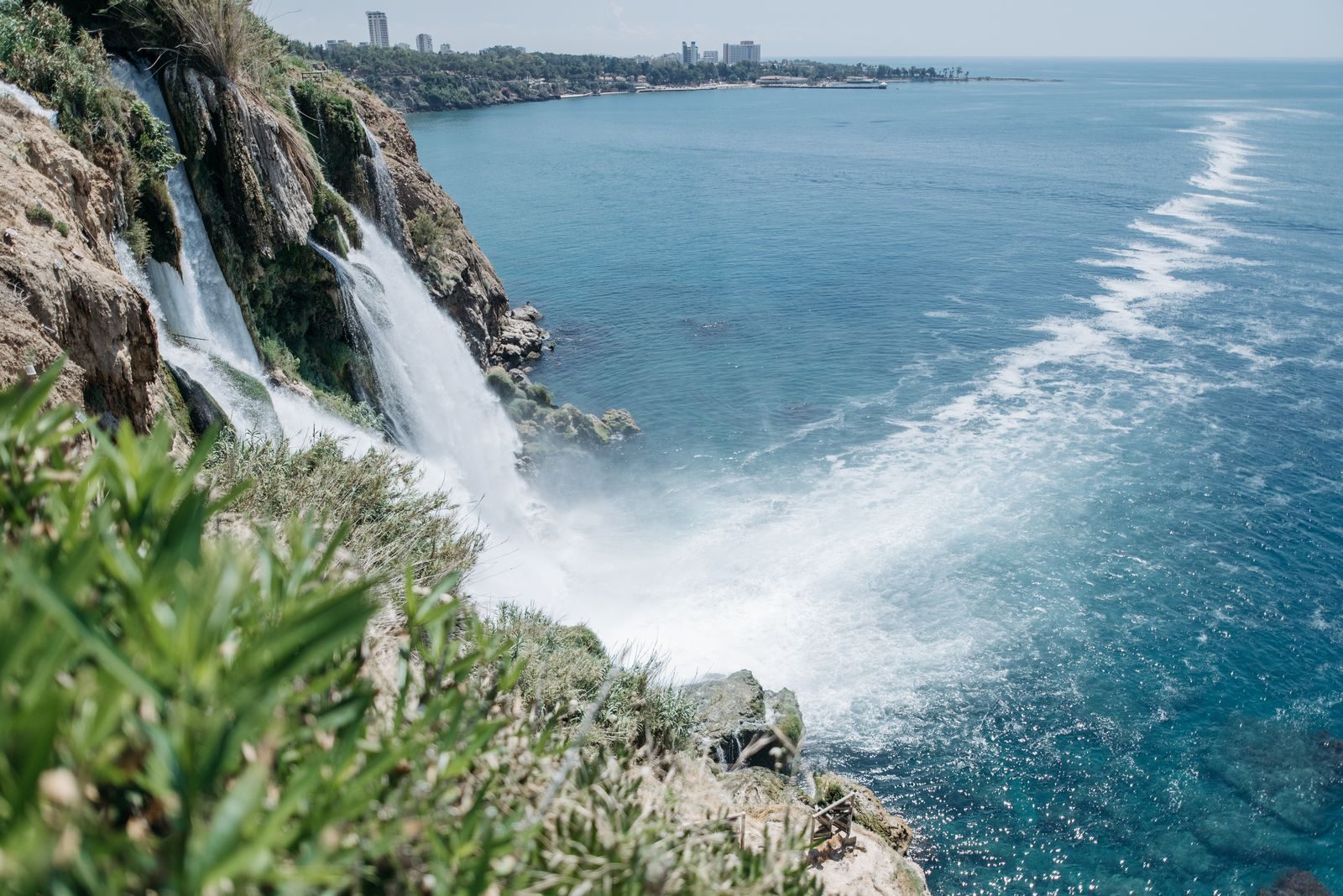
Cover photo: Pavel Danilyuk, Pexels (Pexels Licence). It shows the point where the Düden Waterfalls in Antalya flow into the sea; it has been selected as a general visual to highlight the focus on nature and water management in the article.
New-build projects for sale in Antalya
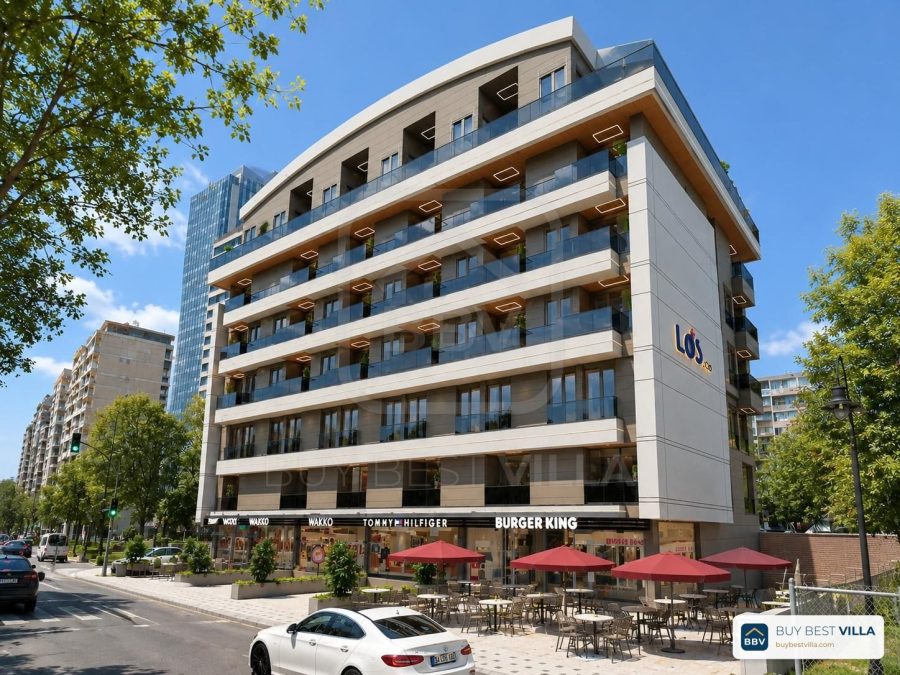
Los Tigres
A boutique development in Sarısu, Konyaaltı, with a pool and covered parking: 1+1 units usable as home or office, plus ground-floor and rooftop duplexes. Delivery August 2027.

Nefes Corner
A boutique corner-plot project with a pool garden and 44 units: ground + mezzanine duplexes, 1+1 and 2+1 flats and roof duplexes.
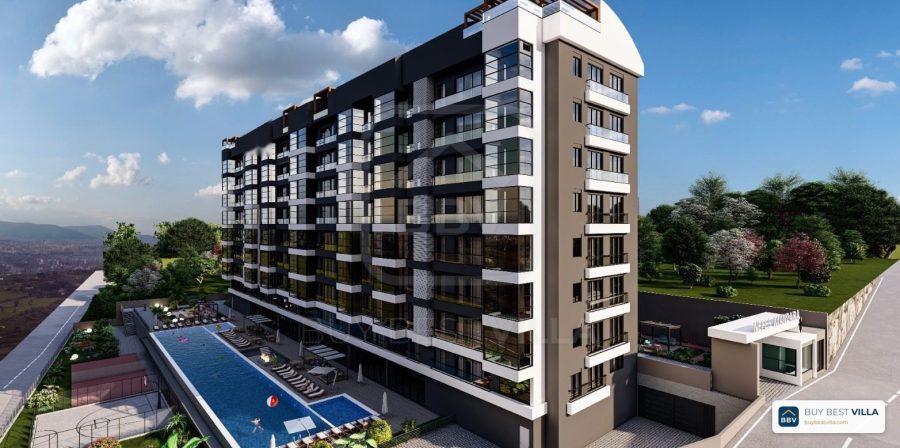
Nefes Premium
A three-block, 56-unit residence in Kepez with a 350 m² pool, tennis court, jogging track, garden duplexes and penthouse duplexes with private pools. From 2+1 to 4+1.