Valuable Housing Tax in Turkey: Who Pays It? 2026 Figures Explained
The valuable housing tax applies only to residences whose building tax value exceeds a set threshold, and owners of a single home are exempt. Here are the 2026 threshold and rates, based on the revenue administration's guide.

If you are buying or holding more than one home in Turkey, you may have come across the term "valuable housing tax" (değerli konut vergisi). The name sounds alarming, but the tax touches only a small group of owners: those whose residences carry a high official tax value and who own more than one home. This article follows the February 2026 guide published by the Revenue Administration (GİB) and explains who is liable, what the numbers mean and how the declaration works.
What the tax actually is
According to the GİB guide, residential properties in Turkey whose building tax value exceeds the amount set out in Article 42 of the Property Tax Law are subject to the valuable housing tax. The threshold is updated every year: the guide gives TRY 15,709,000 for 2025 and TRY 17,711,000 for 2026. The 2026 figure was announced in the Property Tax Law General Communiqué (Series No. 88), published in the Official Gazette on 31 December 2025.
The key concept is "building tax value". It is not the sale price in the title deed or the advertised price; it is the value the municipality calculates under the Property Tax Law. A flat can have a high market price and a much lower tax value. To find out yours, ask the municipality where the property is located for a document showing the building tax value. Each independent unit is assessed separately.
Whether a property counts as a residence is decided by looking at its recorded status and also at how it is actually used.
Who is liable?
The taxpayer is the owner, the holder of a usufruct right if there is one, or otherwise the person who behaves as the owner. With shared ownership each owner is liable in proportion to their share; with joint ownership the owners are jointly liable. The guide ties liability to ownership status rather than to nationality.
Liability begins in the year after the year in which the threshold is exceeded. For example, someone who buys a qualifying home during 2025 becomes liable at the start of 2026.
Who is exempt?
The guide lists these main exemptions:
- Residences owned by public budget administrations, municipalities, universities and TOKİ,
- On a reciprocal basis, embassy and consulate buildings and residences of international organisations,
- Newly built, not yet sold residences held in the books of businesses whose main activity is building construction,
- A person's only residential property in Turkey,
- For owners of several residences, the single lowest-value property among those that fall within the tax.
A family with one home therefore does not pay this tax, whatever its tax value. Owners of several homes must notify the tax office, within the filing period, which property they want the exemption applied to. If they fail to do so, or lose the conditions without telling the office, the tax can be collected with penalties and late-payment interest.
How the 2026 rates work
The tax applies only to the part above the threshold, not to the whole value. For 2026 the GİB tariff is:
- Tax value between TRY 17,711,000 and 26,567,000: 3 per thousand on the part above 17,711,000,
- Between 26,567,000 and 35,425,000: TRY 26,568 plus 6 per thousand on the part above 26,567,000,
- Above 35,425,000: TRY 79,716 plus 10 per thousand on the part above 35,425,000.
One of the guide's examples shows the mechanics: for a residence with a 2026 building tax value of TRY 25,725,000, the tax is (25,725,000 − 17,711,000) × 3 per thousand = TRY 24,042. That figure is only an illustration; in your case the value on the municipality's document applies. With shared or joint ownership, the base is the total value of the property.

Photo: Jörg Fuhrmann (Intermerker) / CC BY-SA 4.0 — Wikimedia Commons
Filing and payment calendar
The tax is assessed on a declaration. According to the guide:
- The declaration is filed with the tax office where the property is located by the end of 20 February of the relevant year.
- A document from the municipality showing the building tax values for the year and the previous year must be attached.
- The tax is paid in two equal instalments, by the end of February and August.
- If you own several taxable residences, all are listed on one declaration; the property to which the exemption applies is notified separately on a dedicated form.
The declaration can also be filed electronically. Note the effect of a sale: in the guide's example, if a property is sold during the first year of liability, the seller still pays that year's tax, and the buyer's own liability starts the following year. When a deadline falls on an official holiday, it moves to the next working day.
Practical points
- If you own several flats, get the current building tax value of each from the municipality and compare it with the threshold.
- Before buying, remember that an additional residence above the threshold can create a new liability.
- Do not forget the exemption notice. The exemption for the lowest-value home is not automatic; it is claimed by notification.
- Check the figures every year. The threshold and the tariff are raised by half of the revalued rate each year, so next year's numbers will differ. Confirm current values at gib.gov.tr.
For the rest of the ownership costs, see our article on the real yearly costs of owning a home in Antalya; for the ordinary annual property tax, read when and how property tax is paid; for what to do after the deed is issued, see the first 30 days after the title deed; and if you are planning a sale, read about taxes and the 5-year rule when selling. Our page on buying a home in Antalya covers the wider process.
In short
The valuable housing tax concerns residences whose building tax value exceeds TRY 17,711,000 in 2026, is charged only on the part above the threshold, and in practice matters mainly to people who own several homes. Families with a single home are exempt. The filing deadline is 20 February. Because the figures change every year, rely on GİB's current guide and on the tax value document from your municipality before deciding.
Source: Revenue Administration (GİB), "Valuable Housing Tax" guide (February 2026, publication no. 581) and Property Tax Law General Communiqué (Series No. 88, Official Gazette 31.12.2025).
If you have questions, feel free to write to us.
---
This content is for general information only and is not legal or financial advice. Please consult a qualified professional before making a decision.
Cover photo: Dosseman / CC BY-SA 4.0 — Wikimedia Commons
New-build projects for sale in Antalya
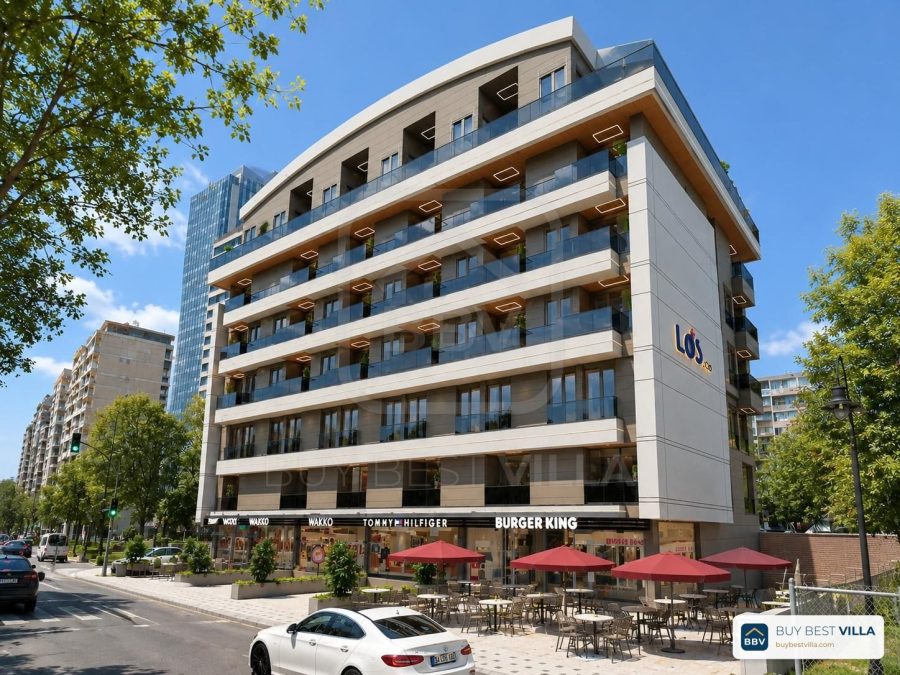
Los Tigres
A boutique development in Sarısu, Konyaaltı, with a pool and covered parking: 1+1 units usable as home or office, plus ground-floor and rooftop duplexes. Delivery August 2027.

Nefes Corner
A boutique corner-plot project with a pool garden and 44 units: ground + mezzanine duplexes, 1+1 and 2+1 flats and roof duplexes.
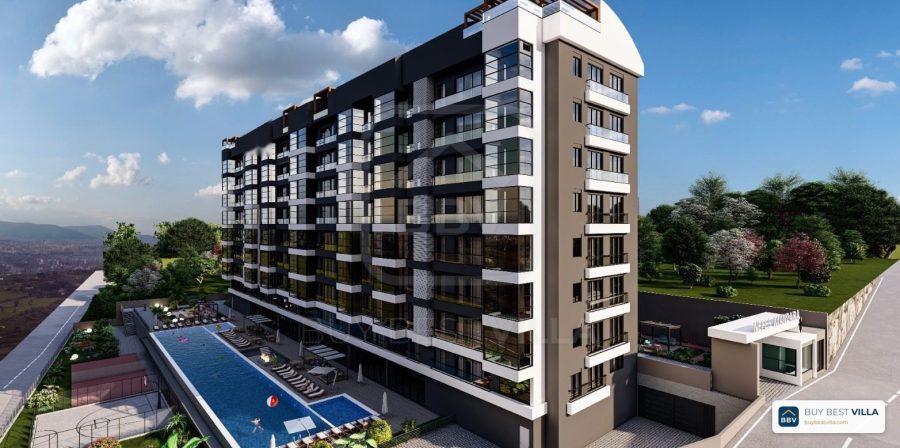
Nefes Premium
A three-block, 56-unit residence in Kepez with a 350 m² pool, tennis court, jogging track, garden duplexes and penthouse duplexes with private pools. From 2+1 to 4+1.