VAT Exemption on New-Build Property in Türkiye for Foreign Buyers (2026)
Who qualifies for the KDV 13/i VAT exemption on new-build homes in Türkiye, how payment must be made, and the three-year rule for 2026.
If you are buying a brand-new home in Antalya from the developer, value added tax (KDV) can be one of the largest single costs in the deal. The good news for many foreign buyers is that Turkish law offers a VAT exemption on new-build property in Türkiye for people who do not live in the country, provided a short list of conditions is met exactly. This guide explains who qualifies, how much VAT is normally due, how the money must reach Türkiye, and what happens if you sell early or later move here.
What the VAT exemption for foreign buyers covers
The exemption comes from Article 13/i of the Turkish VAT Law (Law No. 3065). It has applied since 1 April 2017 and, as of September 2026, it remains in force. Later tax changes, such as Law No. 7524 of 2024, did not remove it.
In short, the law exempts the first delivery of a newly built home or workplace by the builder to a buyer who is not resident in Türkiye, when the price is brought into the country in foreign currency.
Three points matter from the start:
- First delivery only. The exemption applies to the first sale of a new unit by the person or company that built it. A resale, even of a nearly new flat, does not qualify, because second-hand sales by private individuals are normally outside VAT anyway.
- Homes and workplaces. Both residential units (konut) and commercial units (işyeri) are covered.
- Delivery of a finished unit. The exemption is applied when the unit is actually handed over in a usable state. If you buy off-plan, the exemption is claimed at delivery, not when you sign.
How much VAT applies to a new-build home in Türkiye
Without the exemption, the developer adds VAT to the sale price. For homes whose building licence (yapı ruhsatı) was issued on or after 1 April 2022, which covers most projects now on sale, the rate depends mainly on the net floor area and on whether the project is part of an official urban renewal scheme.
| Situation (licence from 1 April 2022) | Net area up to 150 m² | Part of net area above 150 m² |
|---|---|---|
| Standard new-build home | 10% | 20% |
| Urban renewal project (Law No. 6306) | 1% | 20% |
| Commercial unit (shop, office) | 20% | 20% |
A few practical notes:
- The tiered system means a larger home pays a blended rate. For a 200 m² net apartment in a standard project, 150/200 of the price is taxed at 10% and 50/200 at 20%, which works out to about 12.5% overall.
- For older licences (before 1 April 2022), the rate could also depend on the land's official unit value and the location, and some units still qualify for 1%. Ask the developer which rule applies to your building.
- Net area is measured by building rules, not the gross area in brochures, so ask for the net figure in writing.
On a typical Antalya apartment, this is a meaningful amount. You can estimate your total purchase costs, including VAT and the title deed fee, with our buying-cost calculator. Note that the exemption only removes VAT; the title deed fee (tapu harcı) and other costs still apply.
Who qualifies for the exemption
The law names three groups of buyers.
1. Foreign nationals who are not resident in Türkiye. Residence here is a tax test taken from the Income Tax Law. You are treated as resident if you have your legal domicile (ikametgâh) in Türkiye, or if you stay in Türkiye continuously for more than six months in a calendar year. People who come for a specific, temporary job are generally not treated as resident, but the tax authority looks closely at whether the job is really temporary.
2. Turkish citizens living abroad. They qualify if they hold a work or residence permit abroad and have lived abroad for more than six months. In the tax office's guidance, the permit must be valid on the transfer date and the six months are counted after the permit was obtained. People posted abroad by Turkish public bodies do not qualify.
3. Foreign companies. Companies whose legal and business headquarters are outside Türkiye and that do not earn income here through a branch or permanent representative can also use it.
Before the handover, the developer must collect documents showing you are in one of these groups. The exact list varies between developers and tax offices. For foreign individuals it commonly includes a passport copy (often with a notarised translation), your entry and exit records, a record from the migration authority about any residence permit, and sometimes proof of an address abroad.
Payment rules: foreign currency, bank transfer and döviz alım belgesi
The price must be brought into Türkiye as foreign currency. The official guidance sets the timing:
- At least 50% of the price must arrive in Türkiye before the invoice is issued.
- The rest must arrive within one year of the sale.
The money normally comes by bank transfer to a bank in Türkiye and is proven with the bank receipt (dekont). Cash brought in person must be declared at customs and proven with customs documents. Once the currency is in Türkiye, it may be converted into Turkish lira and paid to the developer in lira; the exemption does not require payment in dollars or euros to the seller.
A currency purchase certificate (döviz alım belgesi) is the bank document issued when you sell foreign currency to a Turkish bank. For the VAT exemption on its own, the key proof is the transfer from abroad. For citizenship through property, however, the döviz alım belgesi is compulsory, so if you plan to apply for citizenship, convert through the bank in the way your lawyer specifies. Our guide to opening a bank account and transferring money explains the banking side.
Keep every transfer receipt. Each one should name you as the buyer and, ideally, refer to the property. Payments made by a third party or from a Turkish account funded locally can cause problems.
The three-year rule: what happens if you sell early
When the law was introduced, the exempt property could not be sold for one year. Law No. 7394 extended this to three years from 1 May 2022, and this is the rule in 2026. Some older articles online still say one year; they are out of date.
If you sell (or otherwise transfer) the property within three years, the VAT that was not collected becomes payable, together with deferral interest (tecil faizi) under Law No. 6183. The person selling must pay it to the tax office before the title deed transfer. After three years have passed, nothing is owed.
In practice, plan an exempt purchase as a home or investment you will keep for at least three years.
VAT exemption and citizenship or residence permits
Citizenship. Buying a home worth at least USD 400,000 for citizenship and using the VAT exemption can work together, and many buyers do both. The citizenship route adds its own rules: the price must be converted at a Turkish bank with a döviz alım belgesi, the value must be confirmed by a licensed valuation report, and the title deed carries an annotation that you will not sell for three years. Because both rules involve three years, the timelines usually line up. See our guide to Turkish citizenship through property.
Residence permits. This is where buyers most often get caught. The law looks at whether you are resident at the time of delivery. If you already hold a residence permit (ikamet izni), live here with a registered address, or have spent more than six continuous months in Türkiye in the calendar year, the developer or tax office may treat you as resident and refuse the exemption. Sources and practices differ on how a short or recently obtained permit is treated, so check your own position before you sign.
Applying for a residence permit after the exempt delivery is a different matter. The conditions in the law are tied to the delivery, and we have not found a rule that cancels the exemption because the buyer later moves to Türkiye; the three-year rule concerns selling. Confirm this with your lawyer or accountant if you plan to relocate soon after buying. Our residence permit guide covers the permit itself.
Practical steps with the developer
- Raise the exemption early. Ask before reserving whether the developer will invoice the unit VAT-exempt under 13/i. Developers then have to claim back the VAT they paid on their own costs, so some price exempt sales differently. Agree this in writing.
- Check your status honestly. Count your days in Türkiye this calendar year and note any residence permit or registered address.
- Get the contract right. The sales contract should state the price, the currency, that the sale is made under Article 13/i, and who pays the VAT if the exemption is later refused.
- Transfer from abroad, in your own name. Send at least half before the invoice and the rest within a year, in foreign currency, and keep every receipt.
- Hand over documents before delivery. Provide what the developer's accountant asks for in time, so the invoice can be issued correctly.
- Review the title deed. Check the annotations on the tapu, and keep your file for at least three years.
Your own lawyer should review the contract and the payment plan. As your advisor, we help you find and view suitable new-build homes, coordinate the process with the developer and work alongside your lawyer, in Turkish and English.
Frequently asked questions
Can I get the VAT exemption on a resale property?
No. It only covers the first delivery of a new unit by its builder.
Does the whole price have to be paid before the handover?
No. At least 50% must arrive in foreign currency before the invoice, and the rest within one year of the sale.
Is the holding period one year or three years?
Three years, since 1 May 2022. Selling earlier means paying the VAT plus interest before the transfer.
I have a Turkish residence permit. Can I still use it?
Possibly not. If you are treated as resident at delivery, the exemption is refused. Check your situation with a lawyer before signing.
Can I combine the exemption with citizenship?
Yes, if you meet both sets of conditions, including the döviz alım belgesi required for citizenship.
Rules and fees in Türkiye change from time to time. This article reflects the situation as of September 2026 and is general information, not legal or tax advice. Confirm the details for your own case with a licensed lawyer or accountant.
Planning a new-build purchase in Antalya? Contact us to discuss your options.
New-build projects for sale in Antalya
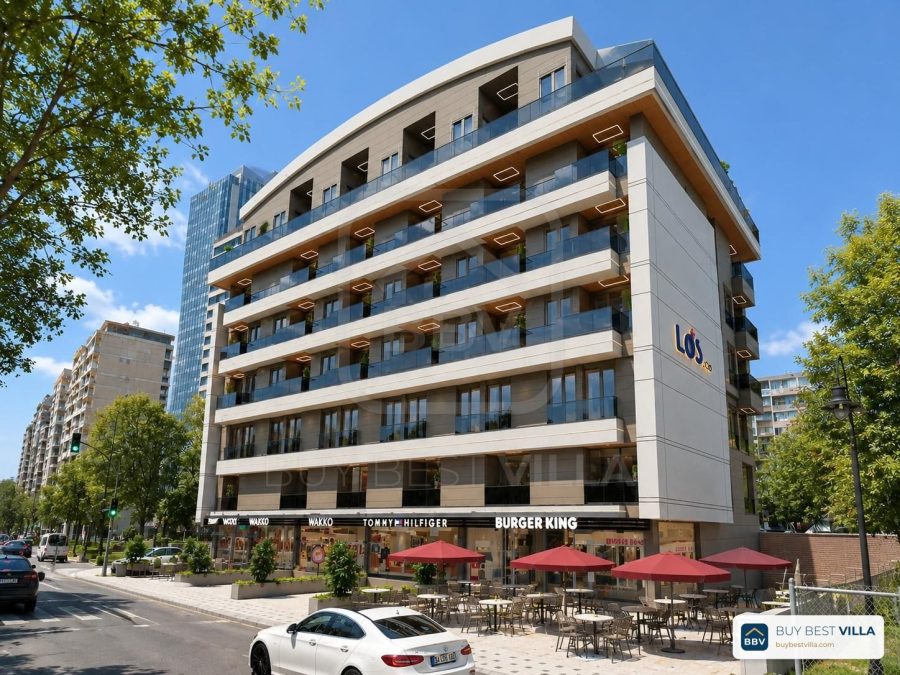
Los Tigres
A boutique development in Sarısu, Konyaaltı, with a pool and covered parking: 1+1 units usable as home or office, plus ground-floor and rooftop duplexes. Delivery August 2027.
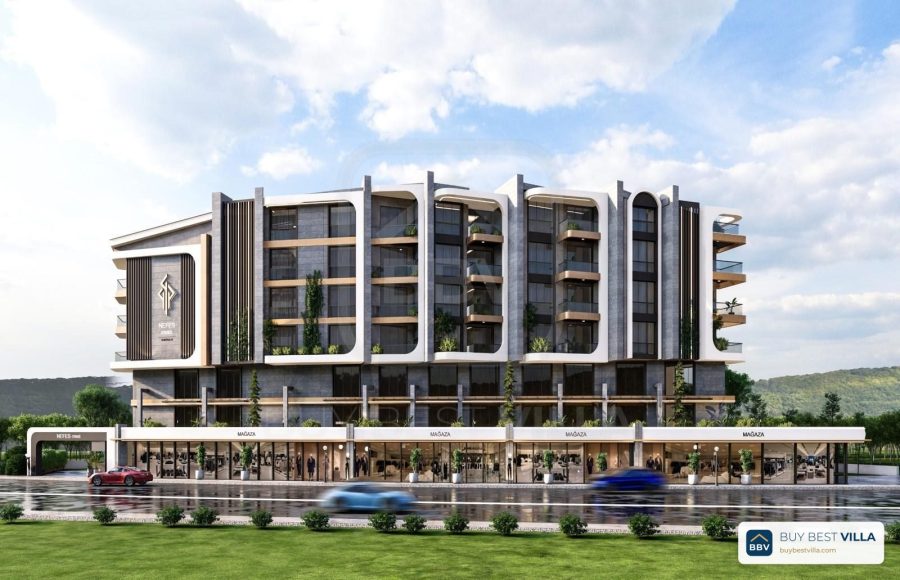
Nefes Corner
A boutique corner-plot project with a pool garden and 44 units: ground + mezzanine duplexes, 1+1 and 2+1 flats and roof duplexes.
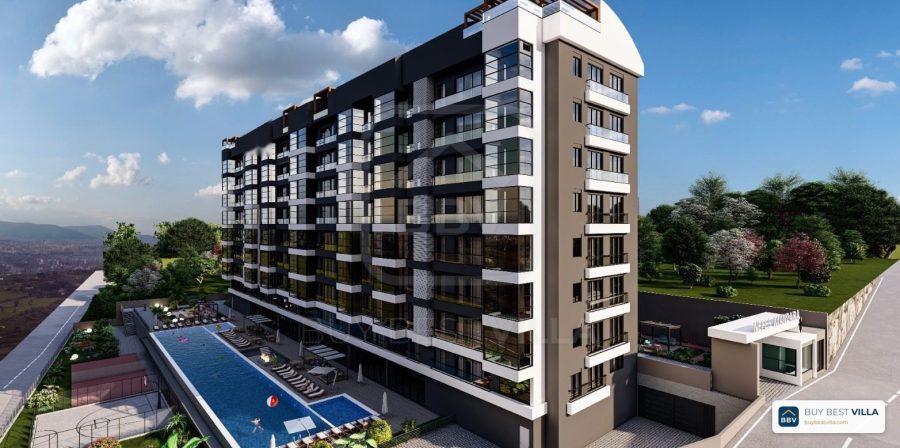
Nefes Premium
A three-block, 56-unit residence in Kepez with a 350 m² pool, tennis court, jogging track, garden duplexes and penthouse duplexes with private pools. From 2+1 to 4+1.