How to Calculate the Rent Multiple and Payback Period When Buying to Invest
We explain the rent multiple, gross and net yield and payback period with formulas and steps, showing how to calculate rather than quoting figures.

Short answer: The rent multiple is the purchase price divided by annual rent, a rough answer to "how many years of rent equal the price of the home?" Payback (amortisation) period is a more realistic version that also counts taxes, service charges, vacancy, upkeep and purchase costs. Because figures change by period and location we give no fixed numbers here; we explain the formulas and how to apply them.
When buying to invest, the most common question is "what is the rental yield?" Many listings and conversations answer with one number, but without knowing how it is calculated you cannot compare two homes fairly. This article walks step by step through the rent multiple, gross and net yield and payback period, which costs not to forget and how to interpret the results. All numbers below are hypothetical, round figures, not market data.
1. What is the rent multiple?
The rent multiple (also called the price-to-rent ratio) is:
Rent multiple (years) = Purchase price ÷ Annual gross rent
Hypothetical example: price 100 units, monthly rent 0.5 units, so annual rent is 6. The multiple is 100 ÷ 6 ≈ 16.7 years. The smaller the multiple, the faster the home appears to pay for itself in rent. The inverse is the gross rental yield:
Gross yield (%) = Annual gross rent ÷ Purchase price × 100
In the same example gross yield is about 6%. It is a quick filter but not the net result.

Photo: Cobija / CC0 — Wikimedia Commons
2. Net yield: count the costs
True yield is found after deducting costs from the rent:
Net annual income = Annual rent − (property tax + service-charge share + DASK + upkeep/repairs + management/commission + vacancy loss + income tax)
Briefly:
- Property tax: paid by the owner. When and in how many instalments is covered in our property tax article.
- Service charge: it can fall on the tenant or the owner depending on the contract and the rules; the logic is in our aidat guide. If the tenant pays, do not count it; if you pay, deduct it.
- DASK and home insurance: fixed yearly costs.
- Upkeep and repairs: refurbishment, paint, appliances; higher when tenants change.
- Commission and management: may be paid to find tenants and run the home.
- Vacancy loss: months without rent during changeovers and works.
- Income tax: rental income is declared and taxed; exemptions, flat-rate expense deductions and rates change by year. See our rental income declaration article and check the Revenue Administration (gib.gov.tr). Stamp duty may also apply to the lease; see our stamp duty article.
For all the costs together, see the yearly costs of owning a home.
3. Payback (amortisation) period
Payback period (years) = Total investment ÷ Net annual income
"Total investment" is not only the price but also title deed fees and costs, commission, renovation and furnishing. In the hypothetical example, total investment 105 and net income 4.5 give about 23.3 years, clearly longer than the gross multiple (16.7). The gap shows how much costs matter.
4. Add rent growth
The simple calculation assumes rent stays constant, but rent rises over time. Statutory caps apply to residential rent increases; the mechanism is in our rent increase article. Modelling an annual increase shortens payback, but the increase is an assumption and real future values may differ. Good practice is to run optimistic, central and pessimistic scenarios.
5. Consider value change and opportunity cost
Return does not come from rent alone; the home's value over time (it may rise, hold or fall) also matters. Compare what the same money would earn in a deposit, another investment or by paying off debt. If you borrow, interest and term directly affect net yield; see how to apply for a home loan.
6. Which type gives a better multiple?
There is no fixed answer, but some general observations. Compact flats (1+1, 2+1) usually reach a wider tenant pool, though multiples vary by location and demand over time. See our 1+1 rental investment article and our 2+1 article. For long-term versus holiday lets, read our long-term vs holiday let article; holiday letting follows separate rules and is more variable.
7. Do your own calculation, step by step
- Add up purchase price and costs (fees, commission, renovation, furniture).
- Set a realistic monthly rent from comparable current listings; use achieved rents, not the highest asking price.
- Compute annual rent and gross yield.
- Estimate annual costs (tax, service-charge share, insurance, upkeep, vacancy) and find net income.
- Divide total investment by net income for the payback period.
- Run three scenarios by changing rent growth, vacancy and costs.
- Compare with deposits, alternative investments and loan interest.
Common mistakes
- Treating the asking rent as the real rent.
- Assuming zero vacancy. Each change of tenant can cost weeks.
- Forgetting tax and service charges. The gross figure misleads.
- Deciding on a single scenario.
- Ignoring title and paperwork risk. Our first 30 days after the deed article tidies subscriptions, service charges and tax records.
Conclusion
The rent multiple is a quick screen; net yield and payback are the realistic indicators that support a decision. Feed the numbers with your own assumptions, current rent data and official tax rules, run three scenarios and compare with alternatives. For the process, see buying a home in Antalya, instalment options and our projects. Feel free to write to us with questions.
This content is for general information only and is not legal or financial advice. Please consult a professional before making a decision.
Cover photo: Wape1989 / CC BY-SA 4.0 / Wikimedia Commons
New-build projects for sale in Antalya
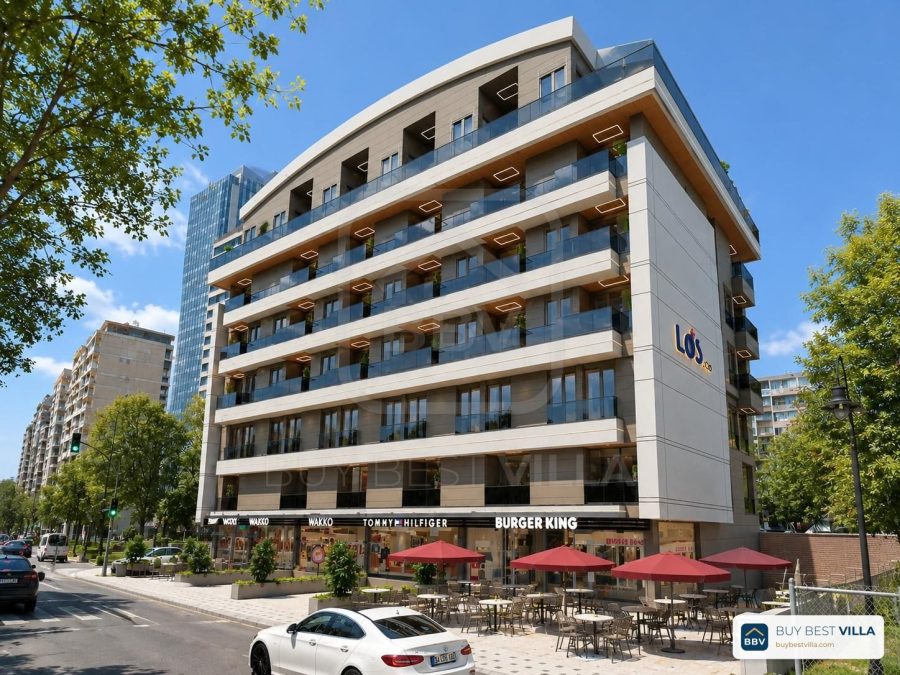
Los Tigres
A boutique development in Sarısu, Konyaaltı, with a pool and covered parking: 1+1 units usable as home or office, plus ground-floor and rooftop duplexes. Delivery August 2027.
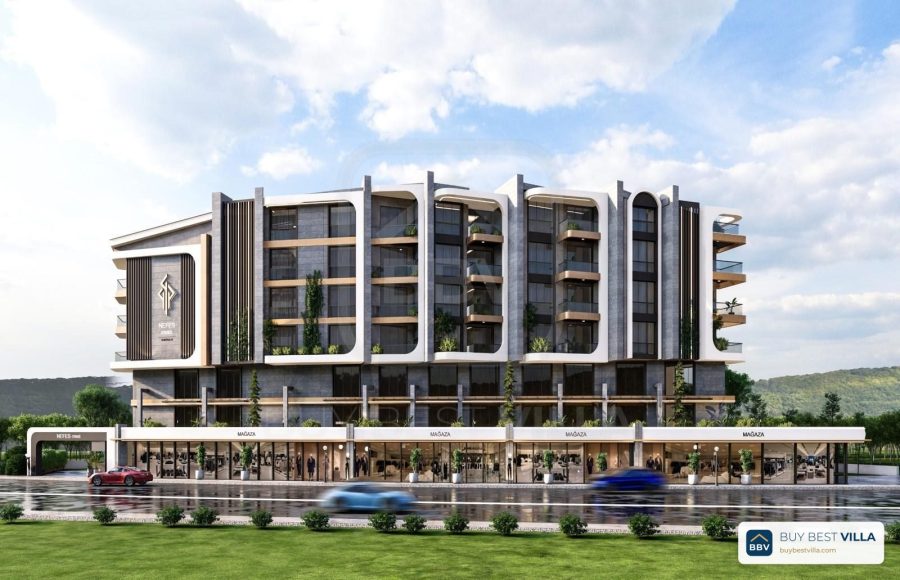
Nefes Corner
A boutique corner-plot project with a pool garden and 44 units: ground + mezzanine duplexes, 1+1 and 2+1 flats and roof duplexes.
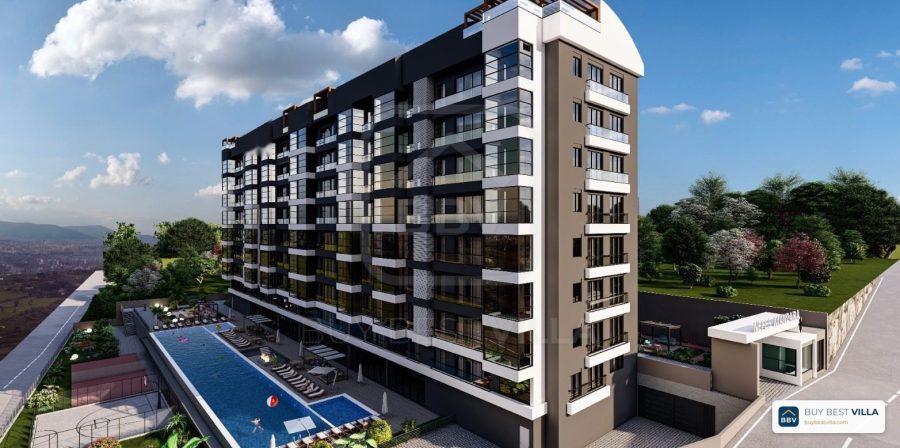
Nefes Premium
A three-block, 56-unit residence in Kepez with a 350 m² pool, tennis court, jogging track, garden duplexes and penthouse duplexes with private pools. From 2+1 to 4+1.