Taking Delivery of a New Flat: Checklist and Hidden-Defect Rights
How to inspect a newly built flat before signing the handover record, how to document snags, and what rights a buyer generally has when a hidden defect appears.

Short answer: Before you sign the handover record, walk through the flat systematically, put every snag in a written and photographed list, and sign with a reservation. For defects that appear later, you need to know the notification and time rules.
Receiving the keys to a new flat is exciting, but handover day is also the first official record of the home's condition. Once the handover record is signed, it may look as if you accepted the flat as it is. This article covers the period before, during and after handover.
Before handover: review documents and contract
It helps to have these with you:
- The sales contract and its technical specification (materials, windows and doors, flooring, heating). See also our guide on reading a project specification sheet.
- The architectural plan, especially net area and room dimensions.
- The occupancy permit (iskan). Why it matters is explained in our article on the occupancy permit.
- Title status: construction easement or condominium title? See kat irtifakı versus kat mülkiyeti.
- The payment plan and outstanding balance statement.
If the occupancy permit exists but the title transfer cannot yet be made, there is another risk; read what to do when the permit is issued but the title is not.
Handover day: inspect in a methodical way
Plan the visit without hurry, ideally in daylight. Bring a tape measure or laser measure, a socket tester, a bottle of water, a phone charger and a notebook. If possible, bring an engineer or architect, or a professional snagging service.
Structure and surfaces
- Cracks, bulges, stains or damp marks on walls, ceilings and floors?
- Are floors level; any loose, cracked or hollow-sounding tiles or parquet?
- Do doors and windows close fully, do locks work, are seals and glass intact?
- Slope, strength and drainage of balconies and railings.
Services
- Do taps and showers work, with hot and cold water running properly?
- Leaks or slow drainage at basins, toilets and pipes? Fill and release water to test.
- Fuse board, earthing and residual-current device; is every socket live?
- Heating: run the combi boiler, underfloor or central system; do radiators warm up?
- Internet, telephone and satellite infrastructure, video intercom and gate automation.
- Drain points and electrical points prepared for air conditioning.
Measurements versus plan
Compare the contract and plan areas with real dimensions and record large differences in the handover record. In any dispute, it matters whether the quoted figure was gross or net; see our article on gross versus net square metres.

Photo: Dosseman / CC BY-SA 4.0 / Wikimedia Commons
Common areas
Entrance, stairs, lift, roof, car park, waste room, generator and any pool or social facilities may be part of the handover. If promised facilities are unfinished, record it in writing. Ask whether the management plan has been prepared.
Put snags in writing
List every defect briefly: place, defect, photo number. Sign the list with the developer's or seller's representative and keep your own copy. A note such as "Accepted subject to the attached list of defects and omissions" in the handover record is important because it preserves your rights. Also have the planned completion dates written next to the items.
If the record contains wording like "the flat was received free of defects and complete", get legal advice before signing.
What is a hidden defect, and what rights apply?
A defect visible to the eye or found in a normal inspection is an apparent defect; one that cannot be found by a normal inspection and appears with time is a hidden defect. Examples include a leak from in-wall pipes, damp caused by missing insulation, or a waterproofing error under the floor.
In general terms, under the Turkish Code of Obligations provisions on the seller's liability for defects and consumer legislation:
- A seller may be liable if the property lacks promised qualities, even without knowing of the defect.
- If apparent defects are not notified within a reasonable time, the buyer may be treated as having accepted the property with them.
- Hidden defects must be notified to the seller immediately once discovered, and the notice should be provable, for example through a notary.
- The buyer may have optional rights such as withdrawing from the contract, a price reduction, free repair or replacement; which one applies depends on the defect.
- For homes bought by a consumer from a commercial seller, consumer law provides a five-year period from delivery; where a defect was hidden by fraud or gross fault, time limits work differently.
When a defect appears, photograph and film it before repairs, consider a court-ordered evidence report, and send written notice. For exact time limits, consult a lawyer.
After handover: a small first-30-days plan
Utility subscriptions, meter readings, monthly fees and property-tax records start with handover. See our guide to the first 30 days after the title deed. If you still worry about the developer, how to check a developer and 10 checks when buying off-plan will help.
Conclusion
Handover is not a key ceremony but an acceptance process. Confirm the papers, inspect methodically, record snags in writing and photographs, and sign with a reservation. If a hidden defect appears, send written notice without delay. For the whole buying process see buying a home in Antalya and our projects. You are welcome to write to us with questions.
This content is for general information only and is not legal or financial advice. Consult a qualified professional before making a decision.
Cover photo: Jörg Fuhrmann (Intermerker) / CC BY-SA 4.0 / Wikimedia Commons
New-build projects for sale in Antalya

Los Tigres
A boutique development in Sarısu, Konyaaltı, with a pool and covered parking: 1+1 units usable as home or office, plus ground-floor and rooftop duplexes. Delivery August 2027.

Nefes Corner
A boutique corner-plot project with a pool garden and 44 units: ground + mezzanine duplexes, 1+1 and 2+1 flats and roof duplexes.
Nefes Premium
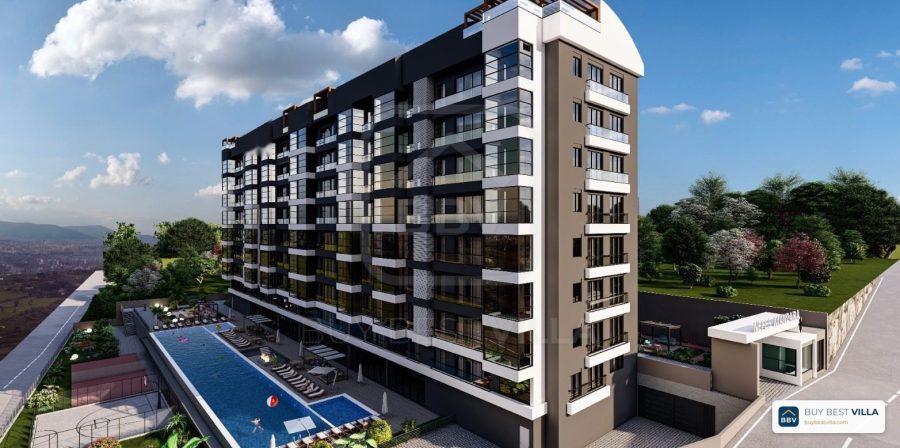
A three-block, 56-unit residence in Kepez with a 350 m² pool, tennis court, jogging track, garden duplexes and penthouse duplexes with private pools. From 2+1 to 4+1.