Owners' Board and Management Plan in Turkey: Voting Rights and Quorums
How are decisions made in an apartment block or residential complex? We summarise the meeting, quorum and voting rules of the owners' board and how a management plan can be changed under Turkey's Condominium Law.
If you live in an apartment block or residential complex in Turkey, many decisions, from renewing the lift to raising the service charge and from parking rules to choosing a security company, are taken in the owners' board (kat malikleri kurulu). For those decisions to be valid, the meeting must be held properly, a quorum must be reached and the right majority must be obtained. Otherwise a decision can be annulled. In this guide we explain the relevant provisions of the Condominium Law (Kat Mülkiyeti Kanunu, Law No. 634, or KMK) through the questions people ask most often.
What is the owners' board?
The owners' board is the decision-making body made up of all owners of independent units in the building. It is the authority on management matters; the manager is the person who carries out its decisions. Unless they contradict the management plan or the law, the board's decisions bind all owners as well as tenants and later owners.
The management plan: the "constitution" of the building
Under Article 28 of the KMK, the management plan has the force of a contract binding all owners. It covers matters such as the management method, the purpose and manner of use of the building, and the fees of managers and auditors. Matters not covered are governed by the law and general rules. The date of the plan and its amendments are shown in the declarations section of the land register; to read such entries, see our guide on checking title deed information through TAKBİS.
To amend a management plan, the law requires the votes of four-fifths of all owners. The point to remember is that this ratio is counted against all owners, not just those who attend. In a complex of 100 flats, for example, at least 80 owners must vote in favour even if only 60 turn up. Supreme Court (Yargıtay) practice shows that written approval is accepted and in some cases expected, so it is wise to consult a lawyer before amending a plan.
When does the board meet?
Under Article 29, the board meets at least once a year at the time stated in the management plan; if none is stated, it is expected to meet in January. In large multi-building complexes, meeting at least every two years is considered enough. An extraordinary meeting can be requested at any time by the manager, an auditor or one-third of the owners. The invitation must be given by signature or registered letter, state the agenda and be sent at least fifteen days before the meeting. There must be at least seven days between the first and second meetings.
Because decisions can later be annulled if the invitation was not properly made, keep written proof of the notice and write the agenda items clearly.
Quorum and decision majority
Under Article 30, the board meets with more than half of the owners both by number and by land share, and decides by majority vote. In other words two conditions apply together: more than half of the owners and more than half of the land shares must be present.
If the quorum is not reached at the first meeting, a second meeting follows. The law envisages it within fifteen days and, at that meeting, a decision can be taken by a simple majority of those present. However, this easier rule does not apply to matters that need a higher majority, such as amending the management plan.

Photo: Anton Nikiforov / CC BY 3.0 — Wikimedia Commons
How voting rights work
Article 31 says that each owner has a single vote, regardless of land share. An owner of a 120 m² flat and an owner of a 60 m² flat have the same voting power. If one person owns several units, the number of votes cannot exceed one-third of all votes, a limit set so that one person cannot steer the board alone. Where a flat has several co-owners, for example an inherited flat, they vote through a single representative. An owner who cannot attend may authorise someone by written power of attorney. For more on deed types, see Turkish title deed types and what to check.
Which majority for which decision?
The general framework of the law and practice can be summarised as follows:
- Ordinary management decisions (annual budget, choosing the manager, advance payments): taken by majority vote with more than half of owners present by number and land share. The manager may be chosen from among the owners or from outside; a manager is mandatory in buildings with eight or more units (Art. 34).
- Improvements and additions to common parts: Article 42 refers to a decision by a majority of owners by number and land share; those who benefit pay.
- Construction, repair and alteration in common parts: the written consent of four-fifths of all owners is required (Art. 19). See which renovation works need management approval for details.
- Amending the management plan: four-fifths of all owners (Art. 28).
- Purpose of use of units: a management plan may require unanimity or a higher majority for certain changes of use, so read your plan.
Because the exact ratio can depend on the nature of the decision, the safest course in doubt is to check the plan and take a lawyer's view.
How decisions are recorded and challenged
Under Article 32, board decisions are written in a notary-certified book with consecutively numbered pages and signed by the owners present. The entries matter for record and proof.
An owner who wishes to challenge a decision can apply under Article 33 to the civil court of peace where the building is located. An owner who attended and voted against can sue within one month of the decision; one who did not attend can sue within one month of learning of it. In any case, no action can be brought more than six months after the decision. These periods do not apply to decisions that are void. Because the periods are short, do not delay your objection.
Service charges and shared costs
Shared costs are the most common subject of decisions. Under Article 20, costs such as the lift, insurance, maintenance and the manager's fee are, unless otherwise decided, shared by land share, and late payers can be charged default interest. For who pays and how, read who pays the aidat and how site fees (aidat) work in Turkish apartment complexes. To understand the difference between the two stages of condominium registration, see kat irtifakı versus kat mülkiyeti.
Practical tips
- Before moving in or buying, ask for the management plan and the latest board decisions.
- Get meeting invitations in writing and check the agenda; decisions on items not on the agenda can cause problems.
- If you cannot attend, give a power of attorney; staying silent does not protect you from a decision.
- Make sure the decision book is notary-certified and kept in order.
- In a dispute, write to the manager first and, if that fails, apply to the court within the time limits.
If you are thinking of buying in Antalya, visit our buying a home in Antalya page, and feel free to write to us with your questions.
You may also find our guides on neighbour law in Turkey useful.
This content is for general information only and is not legal or financial advice. Please consult a specialist before making a decision.
Cover photo: Another Believer / CC BY-SA 4.0 — Wikimedia Commons
New-build projects for sale in Antalya
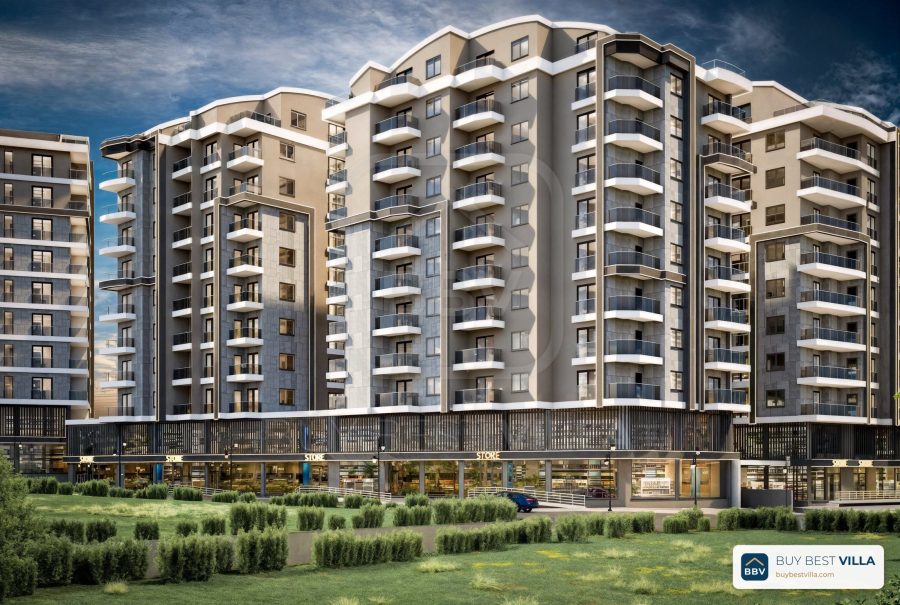
Meridien Nova
A new eight-block residential and office development in Yüksekalan, Muratpaşa, set around a landscaped pool courtyard with covered parking. From 1+1 apartments to 4+2 duplexes.
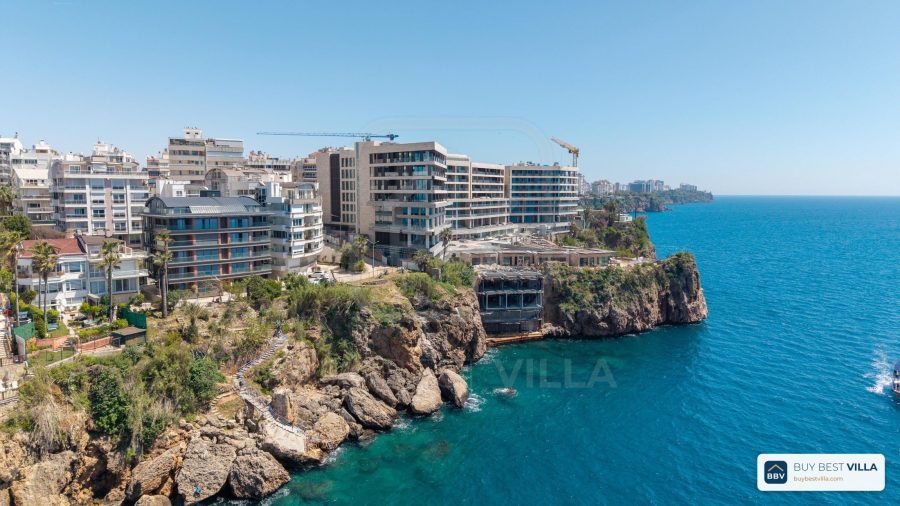
Sirius Manzara
A 10-unit boutique building on the seafront in Işıklar, next to the old town: sea-view 3+1 apartment and 4+1 roof duplex with smart-home and premium specifications.
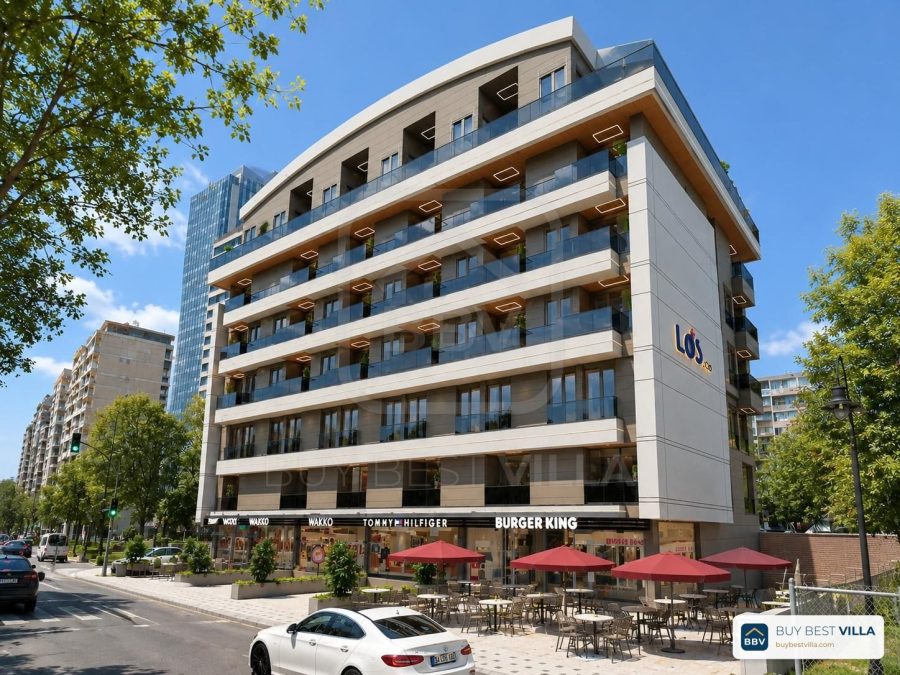
Los Tigres
A boutique development in Sarısu, Konyaaltı, with a pool and covered parking: 1+1 units usable as home or office, plus ground-floor and rooftop duplexes. Delivery August 2027.